
What Earnings Taught Me
AI Hardware Keeps Winning. AI SaaS Arrived. Execution Matters.

This is going to be a lengthy report. Not only because many companies reported, but because this earnings season answered a lot of questions.
Here’s what we’ll cover:
Networking remains the strongest AI theme with Arista and Astera Labs.
SiPho demand continues to accelerate with Tower Semi and GlobalFoundries.
The 800VDC thesis is facing execution issues with SolarEdge and Fluence.
AI SaaS is proving its value with Palantir and Zeta.
I also discuss two investing concepts through Fluence and Palantir that I believe are must-reads if you want to become a better investor.
Before we begin, a quick reminder that I comment on the market almost daily in the Substack chat. If you’re only reading the articles, you’re missing a large part of the subscription where I share market views, price action, portfolio updates, alerts and much more in real time.

Now, let’s dive into this earnings season.
The Networking Bull Run
Arista Networks
Core position in Substack portfolio | Bought at $141 on 14/05/26 | +39.9%
A quarter ago, the market sold Arista on what I believed were overblown concerns.
My first takeaway is that the market is treating Arista unfairly. Yes, gross margins are a bit hurt with component prices and the current memory supply shrinking and yes that could be the case for years, but that will impact every hardware providers’ margins eventually and Arista’s management has always been first class, with premium operating margins which aren’t moving. Their wrong this quarter was to have a too honest management, but the truth is that they are a leader in the component with the most demand at the moment: XPOs.
I bought Arista today at $141. I only built a 60% position size for now, and will buy the full position if we go closer to its W50.
This quarter confirmed my view.
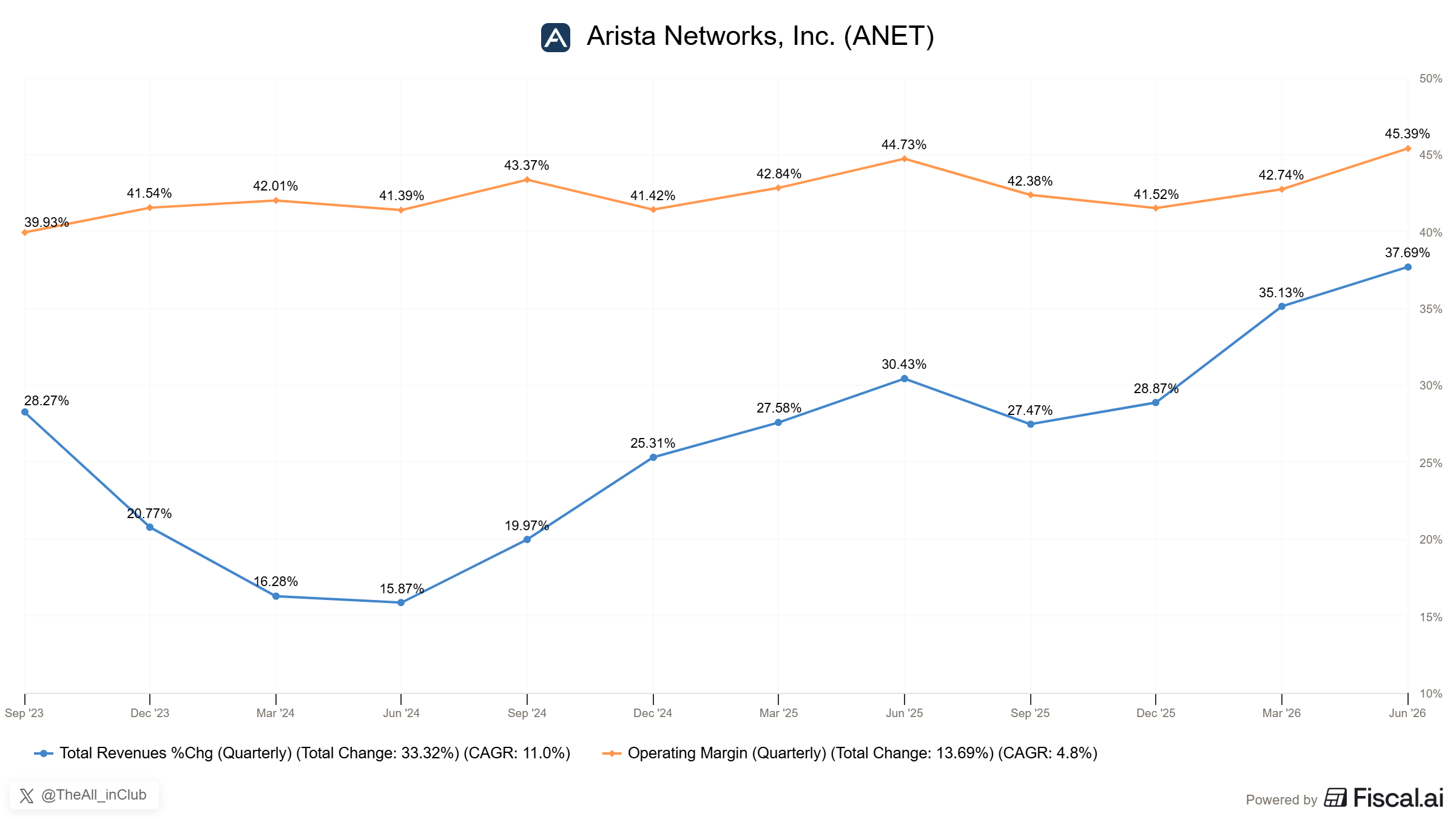
Today, management confirmed they worked hard on resolving those supply issues and increased their guidance to 40% YoY growth with stable gross margins for the year, stating many times that the market was focused on networking solutions for scale-in/across/out with their products being flagship products for today’s concerns - while they continue to develop tomorrow’s architecture.
I have never witnessed the combination of rapid innovation and scale deployment that we are seeing in AI networks.
To match our capacity with customer demand, we've increased both our manufacturing and distribution capacity.
Ken Duda & Todd Nightingale, Arista Q2-26 Earning Call
Networking demand remains massive because inference requires faster and more efficient infrastructure and Arista continues to execute better than anyone else in the sector.
Investing wise,
AsteraLabs
No position | Would buy on opportunities
The thesis continues to play out, even though I had to exit the position in January after it lost its W50. Back then, my thesis was simple:
The necessary next step is optimized, more efficient compute, to help providers deliver more with less. This grows revenues and margins by reducing costs & will reassure the markets about the financial soundness of [hyperscalers] expansion.
Maximizing compute per unit of space & energy is core for any provider’s profitability. Demand for the hardware capable of doing so will grow because providers have no choice but to buy it. They are in a race against their own leverage & need efficiency to generate cash as fast as possible.
This quarter confirmed exactly that.
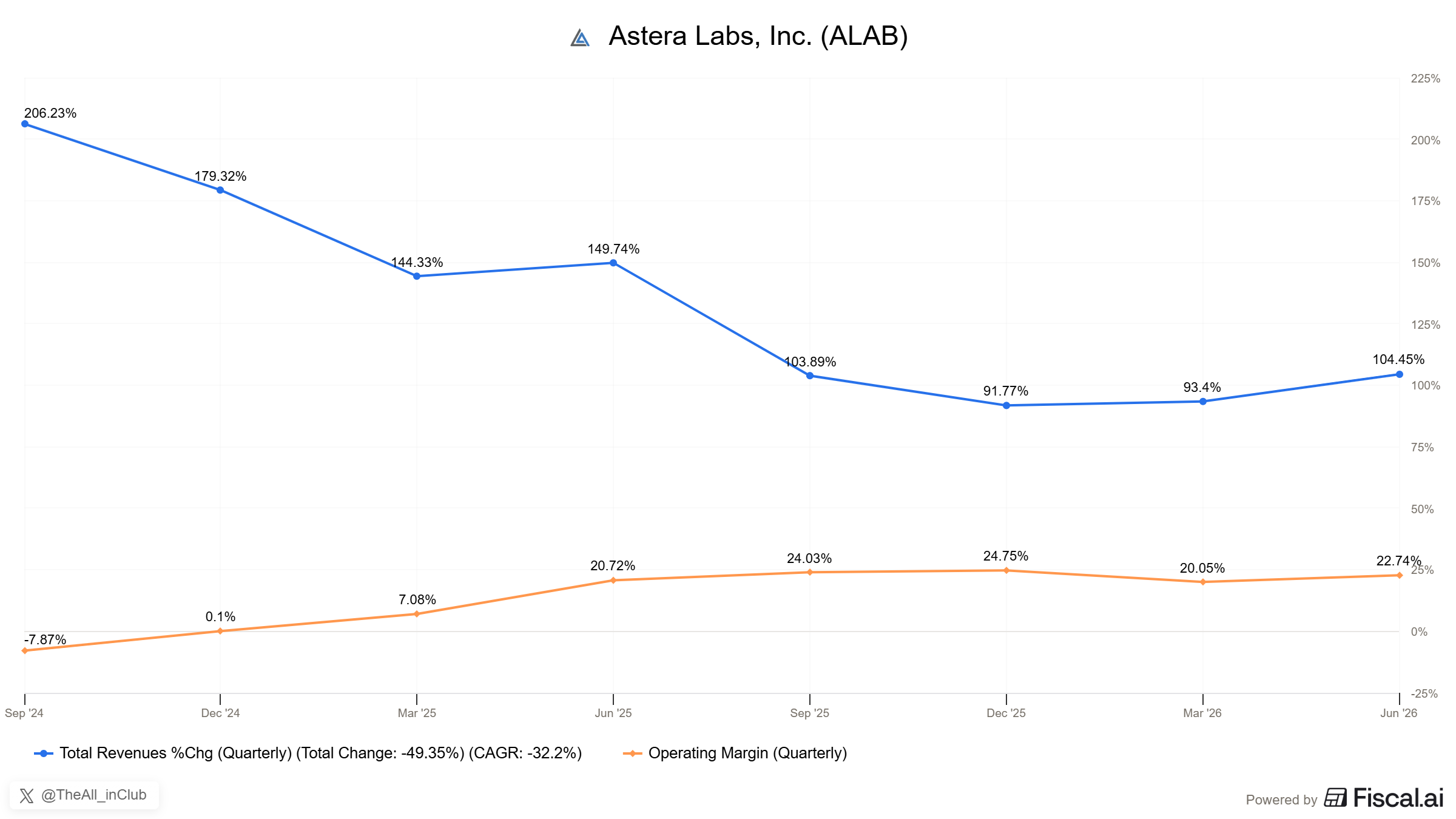
Revenues are accelerating, margins remain stable; the main driver is growing demand for scale-up AI infra. Scorpio X entered volume production ahead of expectations, while Scorpio P continues to expand.
On the AI fabric front, Scorpio delivered significant growth in Q2. High-radix Scorpio X-Series has entered volume production and will continue to scale materially in the second half of this year. We expect Scorpio to become our largest product family in Q3, which is one quarter ahead of our prior expectations.
We are now shipping multiple configurations of Scorpio X-Series into scale-up applications to our initial customers, we remain on track to ship Scorpio X-Series to additional customers by year-end. Scorpio P-Series also continued to expand across multiple customers, with new shipments to hyperscalers and AI infrastructure providers. These programs are currently in pre-production and are expected to ramp more meaningfully in 2027. We are also closely engaged with our customers to support their future system architectures with purpose-built AI fabrics, including next-generation PCI Express and UALink protocols. Upcoming AI systems will employ more complex switching topologies to enable larger XPU cluster sizes and higher bandwidth. These designs are expected to drive a material increase in our silicon dollar content per XPU.
Jitendra Mohan, Q2-26 Earning Call
The thesis was about AI infrastructure becoming increasingly optimized. Nearly a year later, that’s exactly what we’re seeing - and it plays right into Astera’s hand.
Management also confirmed the optical roadmap remains intact, with NPO expected around 2027 and CPO further out, with products already being developed for both transitions.
Investing-wise,
Photonics Foundries
Before diving into GlobalFoundries and Tower Semiconductor, let’s take a step back.
Both companies are expanding production to meet accelerating demand for silicon photonics, primarily driven by NPO deployments in AI data centers. That highlights one of the most interesting AI supply chains to own today:
Soitec (SOI wafers) → GFS/TSEM (SiPho manufacturing) → Arista (NPO and networking).
Marvell also plays an important role through its engineering.
Looking at the supply chain instead of individual companies reinforces my conviction in Soitec. If the two largest silicon photonics foundries are expanding capacity, demand for SOI wafers should naturally follow.
Global Foundries
Sold at $68.8 for a 63.8% gain | Could buy on opportunities
The thesis continues to play out. Demand for silicon photonics is accelerating - exactly what we discussed with Soitec a few days ago, led by pluggables.
Within this end- market, we saw strong customer demand for our silicon photonics and silicon germanium offerings. In both of these high-margin technologies, we’re ramping capacity and making the necessary investments to unlock increases in demand indicated by our customers.
Given the accelerating demand outlook from our customers, we now expect to achieve full-year 2026 revenue growth in the range of 50%-60% for our communications infrastructure and data center end-market, up from our prior expectations of high 30s percentage year-over-year growth, which we believe is an early indication of the long-term growth opportunities ahead for GF in this end- market.
Sam Franklin, Q2-26 Earning Call
Demand is no longer the question. GlobalFoundries is expanding capacity because customers are asking for more, not because management is hoping demand will arrive.
The challenge is that AI represents only ~16% of total revenues. Communications infrastructure and data centers are accelerating rapidly, but automotive and mobile remain much larger segments and continue to weigh on overall growth.
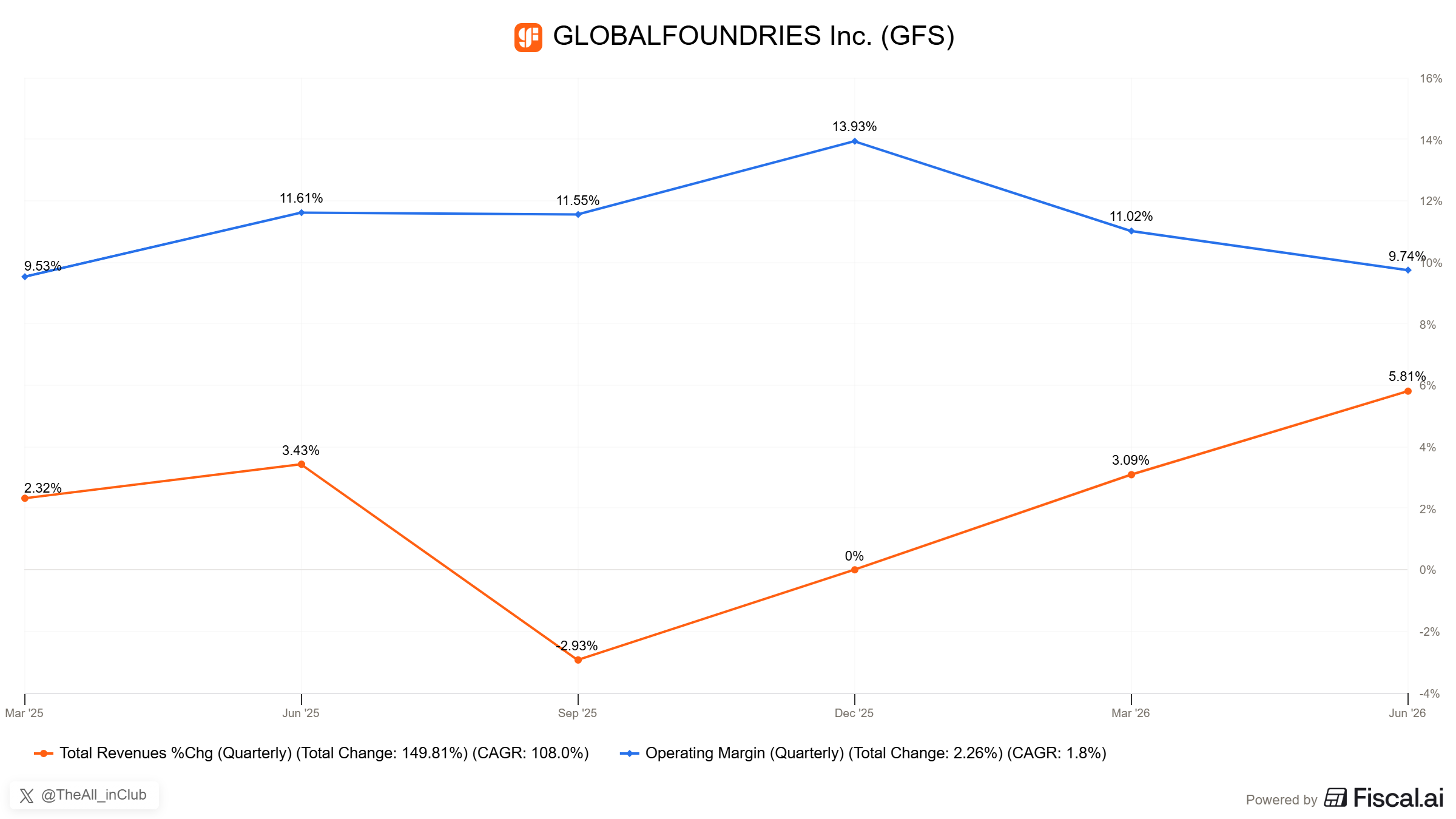
Management confirmed they’ll continue to expand capacity for SiPho, boosted by a $300M award from the U.S. Department of Commerce, and are planning to increase prices.
With respect to pricing, we're encouraged by the improving industry dynamics as well as the evolving mix of our business towards highly accretive technologies. In addition to these positive mix shifts, in the second quarter, we implemented pricing increases in partnership with our customers across several technology corridors. Following the satisfactory conclusion of these customer conversations, we expect the pricing adjustments to be reflected in revenue commencing in 2027. The magnitude of these pricing increases varies by end market and technology and contemplates the differentiated value we provide, the ongoing supply and demand dynamics, and the inflationary absorption across our industry in recent years.
Sam Franklin, Q2-26 Earning Call
The pricing discussion may be even more important. Growing demand is translating into pricing power, which should support both revenue growth and margins over the medium term.
Quantum also received attention with the new $375M U.S. grant. It’s a positive but not something I’d include in an investment thesis. Great upside if it works, impossible to model today.
Investing-wise,
Tower Semiconductor
No position | Could buy on opportunities
TSEM is showing the same dynamics: accelerating demand and capacity expansion, without the drag from legacy businesses. As a pure AI foundry, its results reflect the strength of demand for both compute and power semi.
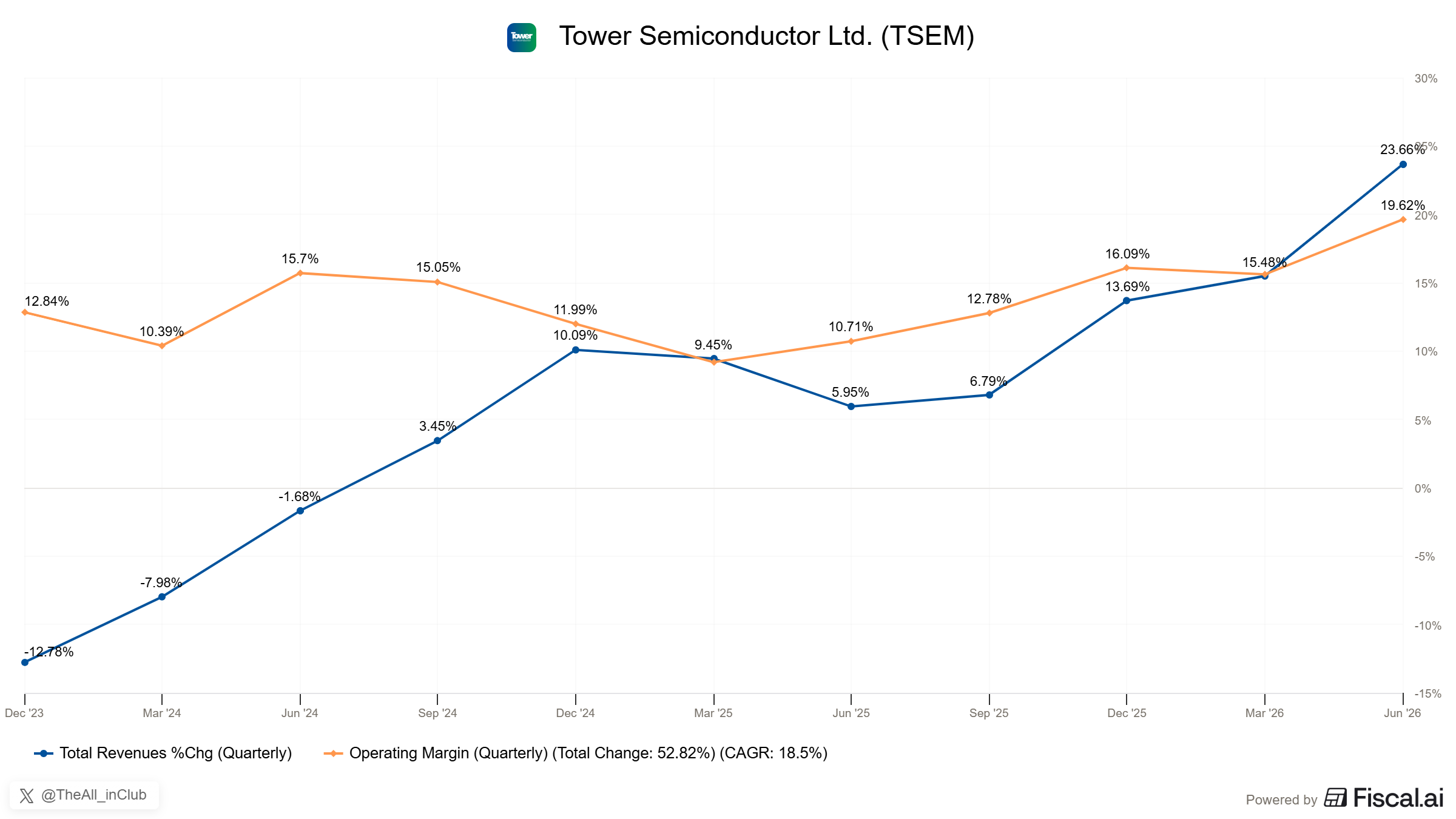
The company reached a $2B run-rate, secured prepayments for 2027 capacity driven by NPO demand, guided for faster acceleration into 2028 and is expanding all of its fabs to meet that demand.
Silicon photonics revenue itself increased by over 60% quarter-over-quarter and over 270% year-over-year, hitting a Q2 annualized run rate of over $680 million, targeting a $1 billion run rate in Q4 2026 as the previously announced capacity expansion continues to be qualified.
During this quarter, we experienced increased demand from existing customers and also saw very strong new customer acquisitions across our power portfolio. This momentum is primarily driven by growth sectors where power density and thermal efficiency are mission critical.
Russell Ellwanger, Q2-26 Earning Call
Hard not to be bullish.
Investing-wise,
Batteries On Fire
Fluence
Sold at $17 for a -12% loss | No plans on buying
We’ll use Fluence as a practical lesson on one of the most important investing principles: respect the market.
Fundamentally, everything looked fine. Backlog continued to grow, with a record $1.44B intake, including the $850M order from the first MSA signed a few weeks ago to supply one hyperscaler with behind-the-meter battery systems.
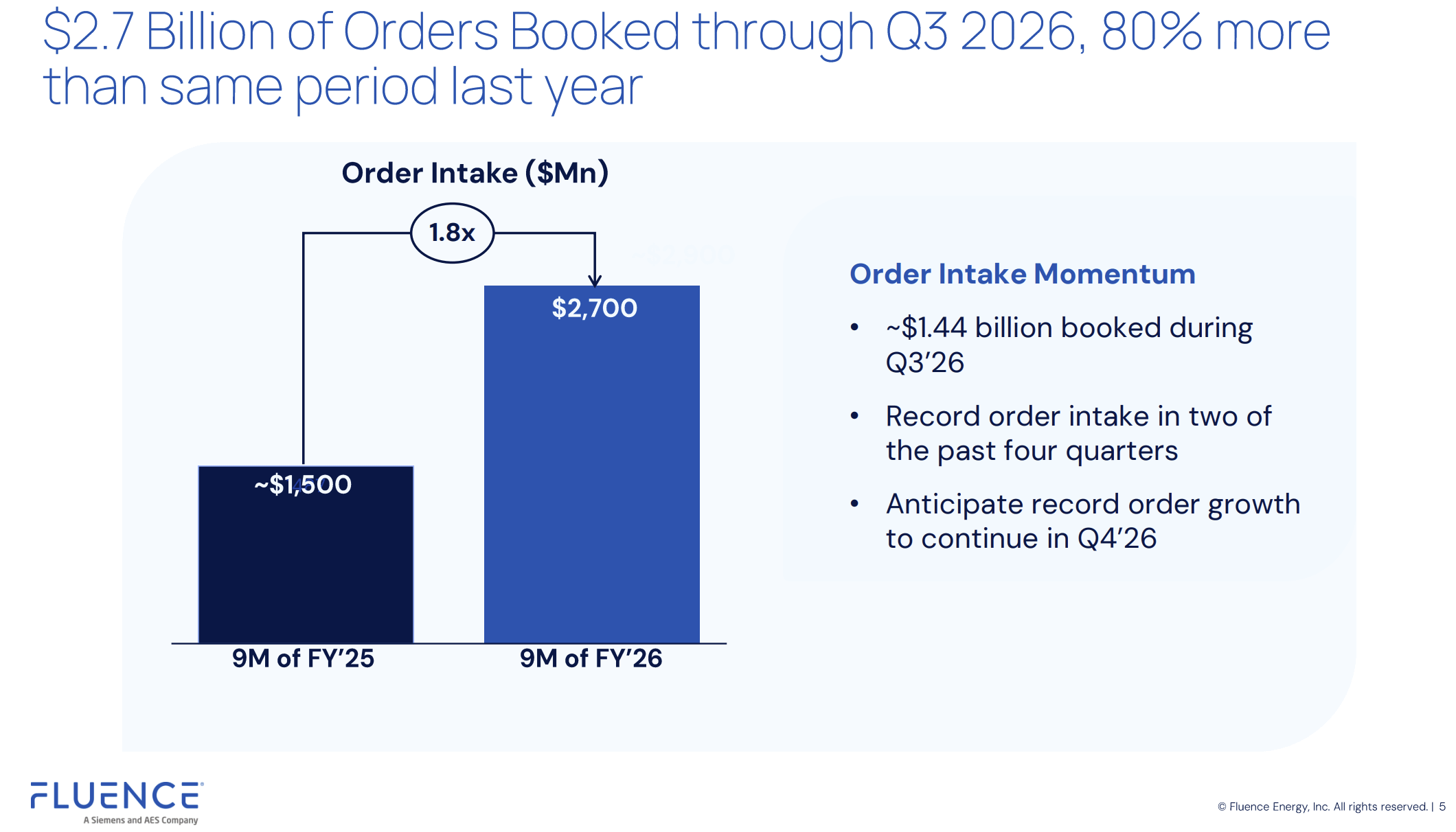
That order confirmed my original bull thesis. Yet the stock still fell 30% after earnings.
We should have seen it coming, even without knowing why. The stock had been warning us for weeks. It lost its W50, broke every meaningful support and never reclaimed them. That kind of persistent weakness usually means one thing: someone knows something we don’t.
Millions of participants interact in the market every day, and liquidity itself carries information. We didn’t know why the stock was weak. We only needed to know that the people moving the most money weren’t buying - they were selling.
Eventually, we found out why.
The company missed revenue expectations and lowered guidance due to execution issues, with production delays at two new manufacturing facilities.
Q3’26 revenue $90 million below expectations due to production delays at two new contract manufacturing facilities:
Three-month delay in ramp of Houston enclosure facility, now initial production
Initial quality issues from international facility, projects now reworked and being shipped
Fluence Q2-26 Slide Deck
The thesis was never simply that hyperscalers needed energy. It was that they needed it today. Bloom Energy is being rewarded because it overdelivers, today. Fluence did not and the market immediately repriced that execution risk.
The market is often excessive. It rewards companies that consistently overdeliver and punishes those that disappoint because it assumes those trends will continue.
I’ve been criticized for selling while “the thesis hadn’t changed”. I disagree. The thesis had changed, we just didn’t know it yet. The market did.
That’s why I respect price action.
SolarEdge
Sold at $42 for a 23.5% gain | No plans on buying
This is a different story from Fluence, I believe the market is overreacting.
We already knew H2-26 would be weaker because management guided for it last quarter. The surprise wasn’t the direction, it was that the core business deteriorated more than expected.
Meanwhile, development of the SST platform for 800VDC AI data centers continues as planned, but commercialization is still years away.
We remain focused on our next planned milestones, getting to a working system in our lab by the end of this year, followed by pilot installations in 2027 and volume shipments in 2028.
Just like Fluence, price action warned us before earnings. The stock lost its W50, failed to reclaim its previous breakout level and was rejected every time it tried to recover its daily averages.
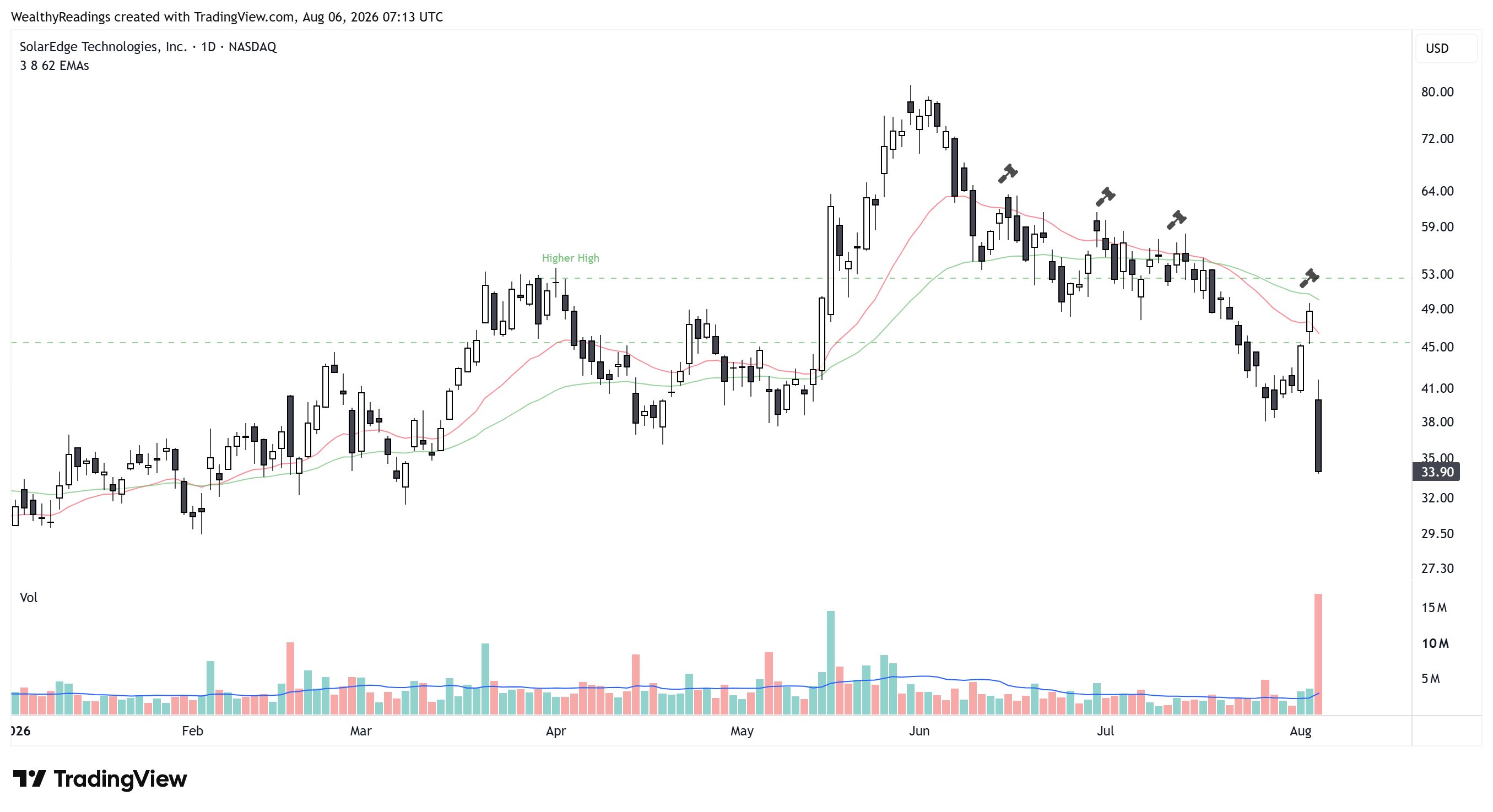
I’ll keep following the company closely, but I won’t do anything until the market starts confirming the story again.
The SaaS Renewal
Palantir
Sold ~$170 for a ~500% gain in late 2025 | Could buy on opportunities
We could spend pages on the numbers, but there isn’t much to say. Palantir keeps doing what it has done for years: accelerating revenue, expanding margins and proving that AI can be transformed into a valuable product. Fundamentals are simply outstanding.
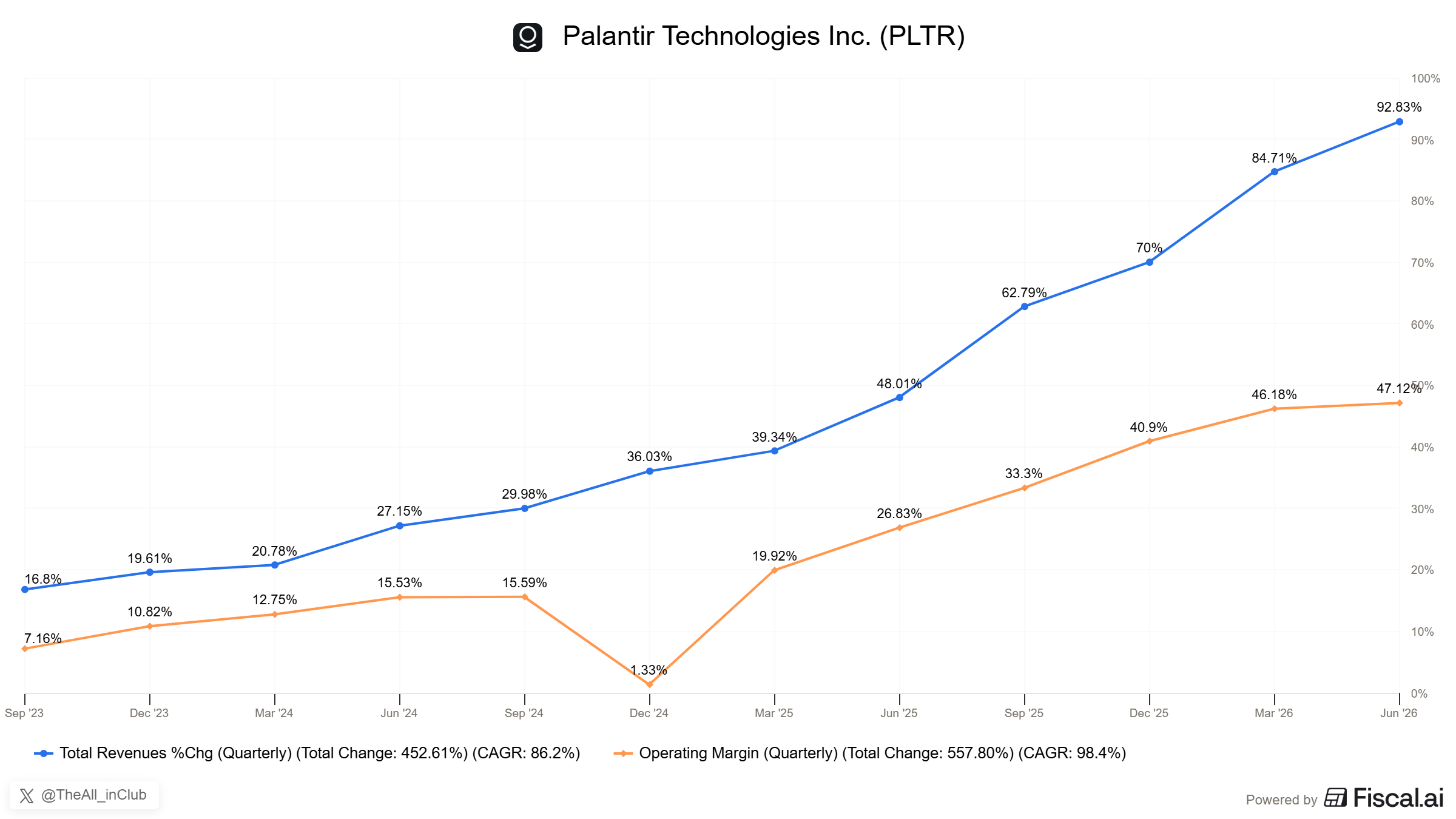
I sold ~$170 because the stock was extended and valuation left no room for error - although there was no error yet.
Ironically, Palantir is one of the best examples of what value investing actually is. Many investors define value as buying companies trading at low multiples.
The market doesn’t; it prices future cash generation.
When a company continues to accelerate revenue, expand margins and prove product-market fit, high multiples are justified because the market is pricing future cash flows and success, not today’s earnings and failure. Like Fluence versus Bloom, the market prices continuity.
Back to earnings, the most valuable takeaway from this quarter wasn’t the numbers but the confirmation of where enterprise AI is heading. Commercial demand continues to explode, with AIP revenue growing 149% YoY and full-year guidance raised to 135%.
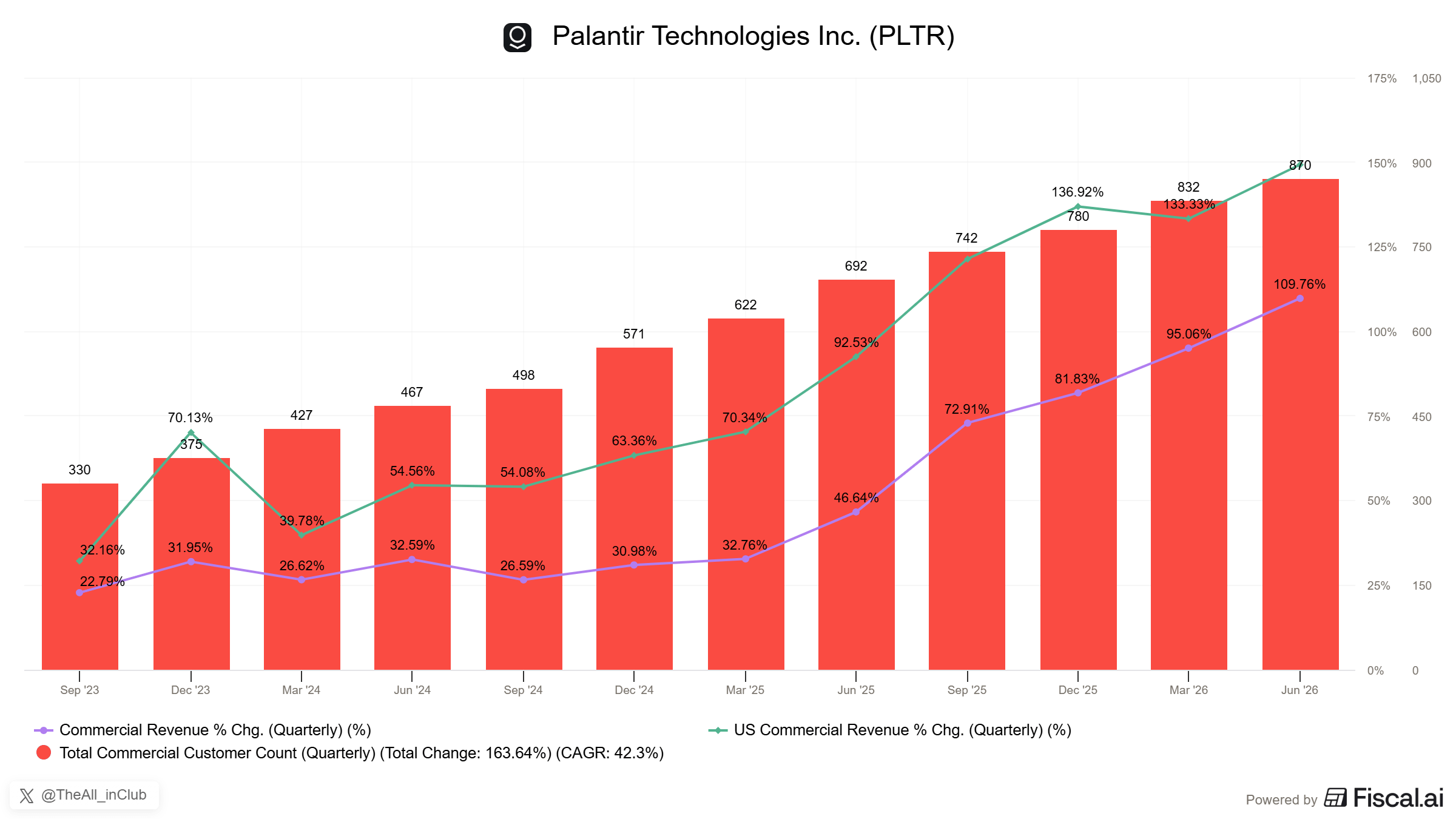
Why? Because enterprises don’t simply want AI. They want AI that solves problems, and that’s what Palantir delivers. Many companies are still experimenting with direct LLM usage, paying for tokens for no meaningful value. Palantir takes those models and turns them into operational software that improves workflows, decision-making and productivity.
That’s why I believe AI SaaS will become one of the biggest winners of this cycle. Just as they optimized business software over the last two decades, AI SaaS will optimize how enterprises actually use foundation models.
Palantir understood that before almost anyone else.
In contrast, enterprises that are not using Palantir are seeing their token meters spinning endlessly just to get slop without any correlation to value. This token model may be working for the labs, but it is not working for anyone else.
On our side of the chasm, what enterprises demand is AI sovereignty, owning the operational definition of the data, logic, actions, and security of their enterprise.
We already learned that different AI workloads require different hardware, specially optimized for them. I see no reason why software will be any different.
Foundation models provide intelligence. AI SaaS provides optimization. That’s where enterprise value is created.
The assumption that the frontier is actually the best performing is just not borne out in practice. Within 24 hours of bringing Nemotron Ultra into our stacks, we found five production tasks where a standard Nemotron Ultra model without post-training beat frontier models. This underscores that a handful of common benchmarks can be gamed.
The reality is that the market has created far more intelligence than it has converted into value.
Investing wise,
Zeta
Sold at $22.25 for a 17.1% gain | Could buy on opportunities
Zeta confirmed my original thesis that AI SaaS should produce clear winners in the short term: companies selling proprietary data and those using AI to optimize business workflows. Broader AI services for consumers will take longer to mature.
Zeta sits firmly in the first category, delivered another double beat, raised guidance and confirmed that demand for its data platform continues to accelerate.
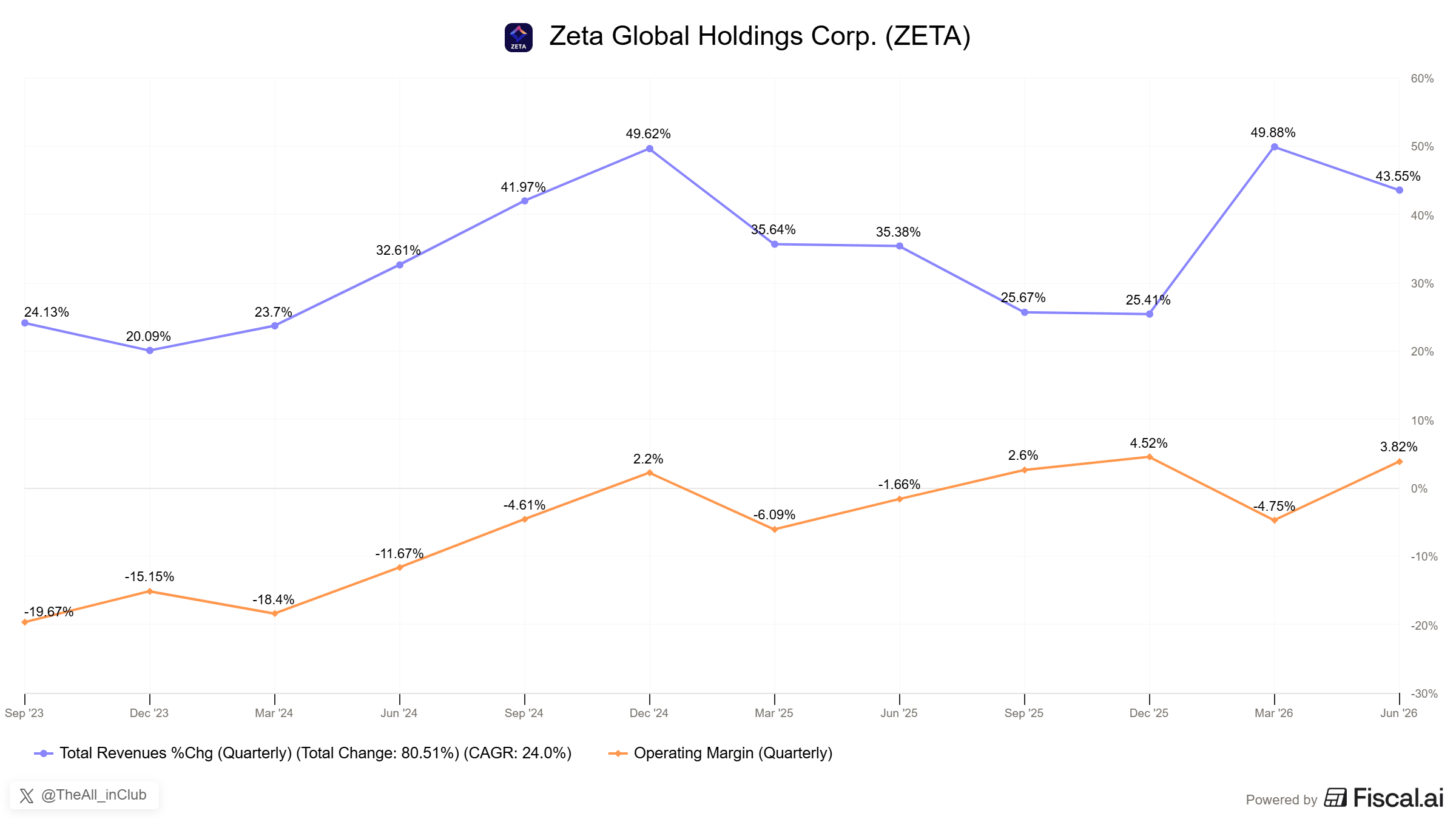
The initial sell-off after earnings was due to incorrect numbers published by financial media, triggering algos selling for no reasons. The stock recovered, as it should have as management highlighted growing adoption of the platform and confirmed that its partnership with Palantir already resulted in “multiple agreements for combined sales”.
That reinforces my broader AI SaaS thesis.
Investing-wise,
In conclusion,
This earnings season reinforced one message above all else: follow the winners. AI hardware continues to lead both fundamentally and technically.
Arista confirmed demand for pluggables remains strong while preparing for NPOs. Tower Semiconductor and GlobalFoundries confirmed accelerating SiPho demand and capacity expansion. Astera reinforced that optimization remains one of the biggest bottlenecks for AI infrastructure. Nothing points to a slowdown before at least next year.
We’re also starting to see a second wave emerge: AI SaaS. Palantir continues to prove that enterprises don’t just want AI - and fail using LLMs; they want AI that creates measurable value. Zeta confirmed the same trend through accelerating demand for high-quality data access.
On the other hand, energy reminded us that a good thesis isn’t enough. Execution matters. Both Fluence and SolarEdge showed that the market has very little patience for delays, even when the long-term opportunity remains intact.
That’s why I continue to focus on strength.
Follow the sectors where fundamentals, execution and price action all point in the same direction.
Today, that’s AI hardware first.
AI SaaS is starting to join.
Disclaimer: I am not a licensed financial advisor, analyst, or broker. This content reflects my personal opinions and investment decisions for informational and educational purposes only. I hold positions in securities discussed and may buy or sell without notice. Nothing here constitutes a recommendation to buy, sell, or hold any security. Past performance does not guarantee future results.
Always conduct your own research and consult a qualified professional before making investment decisions. I accept no responsibility for any financial losses.