

It’s getting hard to be bearish fundamentally when most companies show growth acceleration, ROI, and managements confirm they see potential for more of this, for longer, as long as they continue to expand.
If you listen to calls, this is what transpires; not only that demand for compute remains supply-constrained, but that AI is delivering ROI. Google showed this, in terms of raw compute/intelligence renting but also in terms of usage, with coding or advertising as the most impacted use cases for now, with many more to come.
The conclusion is straightforward for a business owner.
Spending generated CapEx and new AI usage emerge as capacity and pricing evolve. So they want more, to make more. Math is easy; you buy something at $10,000, have it refunded in ~3 years for a lifetime of ~6; half of its lifetime is pure profit. Why stop?
My original thesis shared ~a year ago was about optimization as a go-to for compute and energy. This is what continues to transpire today with continuous need for both while the market prices skepticism.
This week’s earnings review should confirm that we don’t need that much skepticism, and go over leaders’ price action with actionable insights on how to play a potential bounce coming in the next months.
AI Has ROI
Let’s start with Meta,
I’ve been very bullish and continue to be, although I had to close my position as the stock lost its support and fell further post earnings, despite a great print, confirming my bull case and my assumption on why the market doesn’t like this stock.
Meta confirmed AI is the source of their financial and business improvements, but had no specific “AI ROI and revenues” line on its statement with no announcement on compute rental, which continues to make that spending look inefficient - even though it isn’t.
The opportunity in front of us is massive. First, we are now at a point where our investments in AI are accelerating every major part of our core business. They're improving the experience for people using our apps, driving better performance for advertisers, and helping our teams build new experiences and ship faster.
Increase in both advertising efficiency and pricing is due to AI, combined with increased spent time apps.
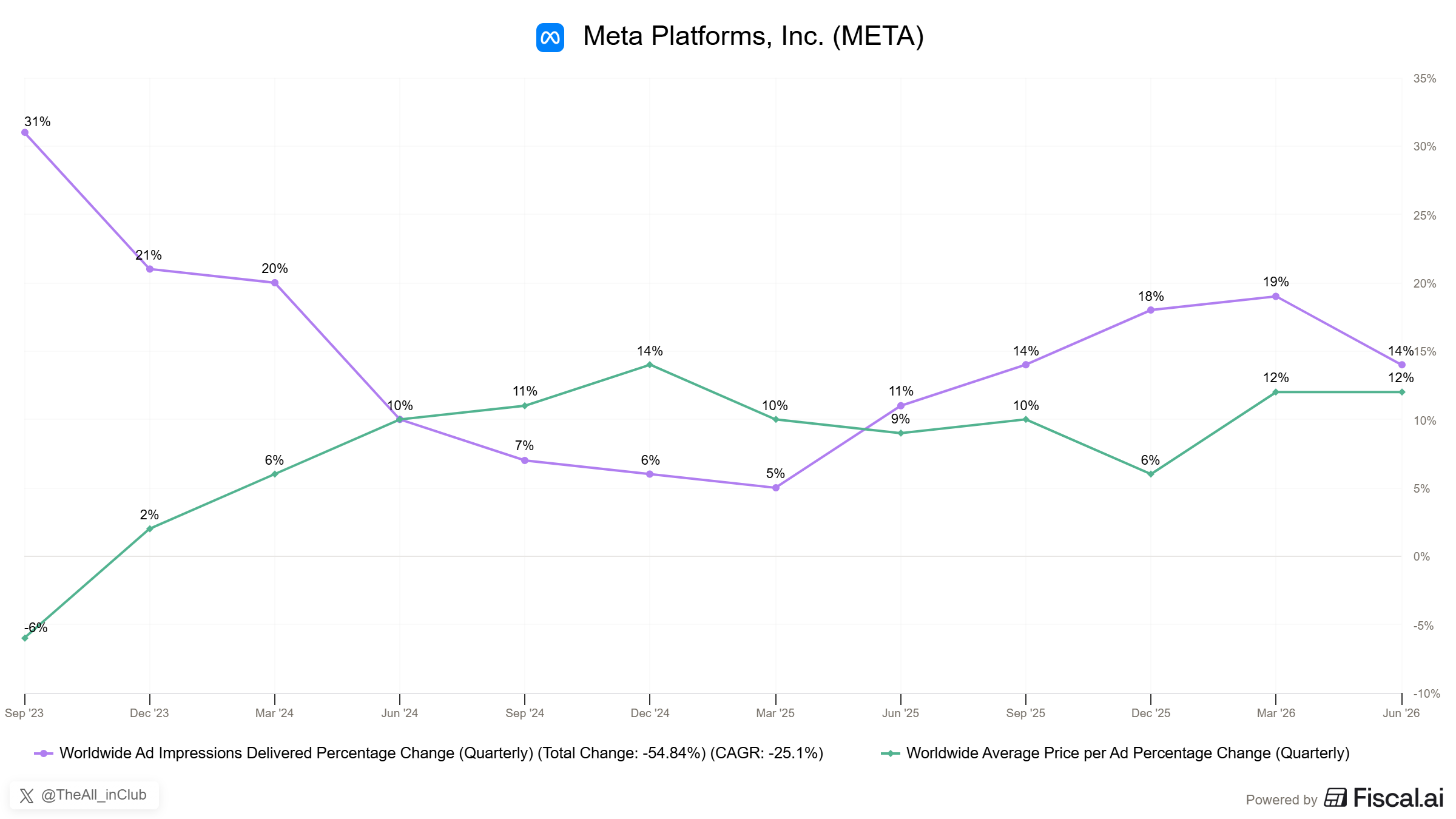
This is where compute goes, and it shows in Meta's revenues and margins which continue to be healthy considering the company's size, with margins falling due to two one-time expenses, which made the quarter look "bad" with a 6% impact on operating margins.
Q2 total expenses were $42 billion, up 55% compared to last year, and included $2.4 billion in charges related to legal proceedings and $1.2 billion in severance expenses in connection with the May 2026 headcount reduction.
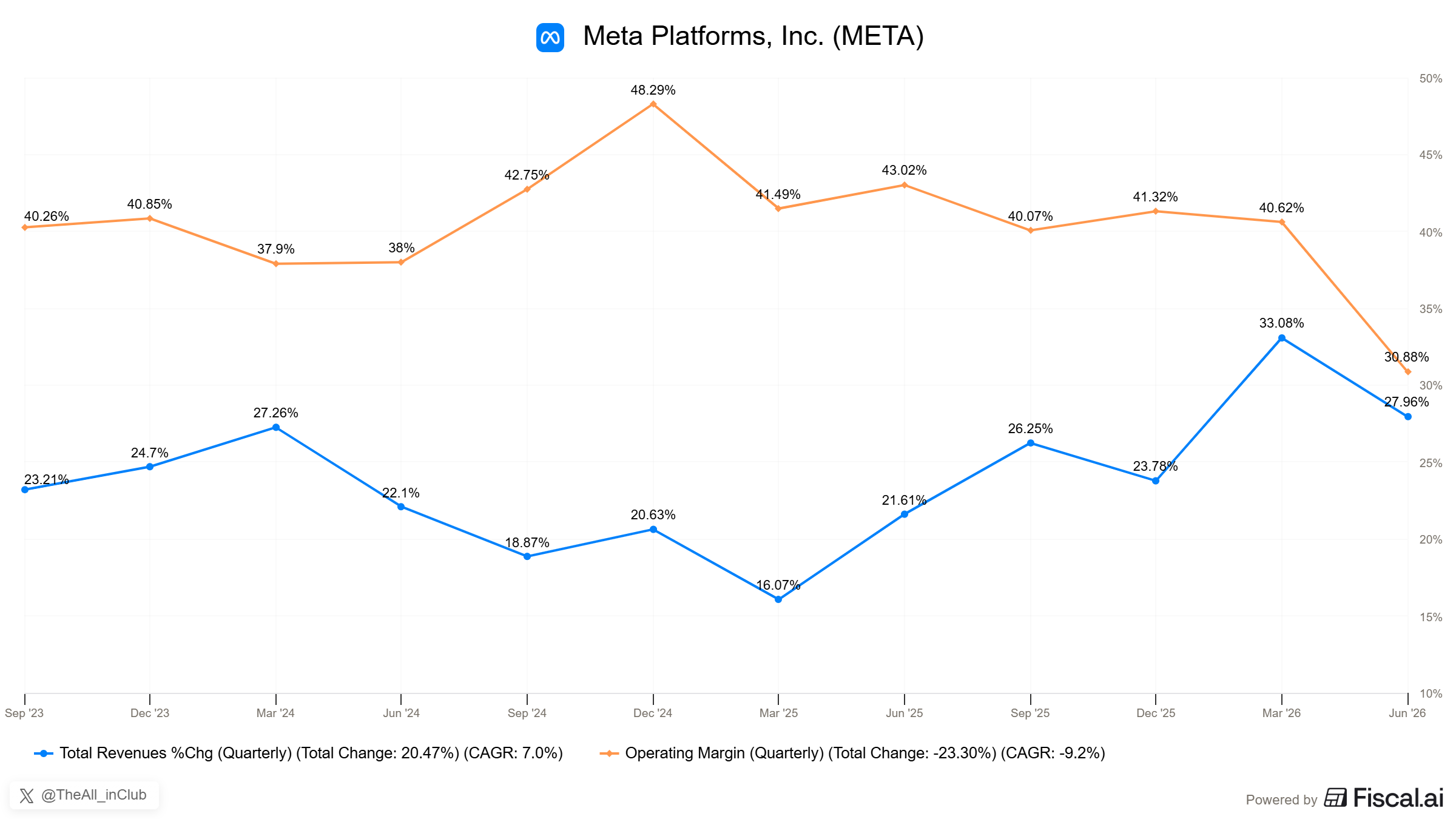
We’d still have a decrease due to higher depreciation/costs, which the market would still dislike, but these levels remain really healthy.
The real battle for Meta remains perception; they need to show that their CapEx does more than “just improve” their core business. They need to show ROI, and confirmed during the call that they will rent compute/intelligence directly to third parties, but did not share any details except to say that we’d hear more about it soon.
This is the catalyst - or so I believe. We’ll talk about Microsoft and Amazon, but when seeing these companies’ results, after Google’s, it is clear that renting AI compute generates ROI and the market is starting to reward it. I see no reason why Meta doing the same wouldn’t trigger stock demand.
We've built our API. We're rolling out business agents. We're getting a lot of offers for compute at a significant premium over what we paid for it, and we have more coding and productivity tools on our roadmap as well.
This is also why management contracted a $14B joint venture with BlackRock for a 1GW AI data center in Texas, owned at 80%/20% by BlackRock and operated by Meta. More plans for more compute - with some clear financial engineering as this will stay out of Meta’s balance sheet due to the structure.
So we are starting to see a few things:
Hyperscalers are using more financial engineering; leverage is starting to increase for the entire economy.
Banks and external investors are starting to put skin in the game, with BlackRock here committing cash and raising debt, after Google’s $10B raise from Berkshire.
No slowdown in buildouts, and institutions are ready to push harder; still financed “healthily” for now with reasonable debt, FCF spending, or dilution, but we start to see an industry raising risks.
Risk which delivers growth and ROI is good risk - Amazon confirms this; issues start when the balance shifts.
The question left isn’t “does compute have ROI?” but “does AI have ROI?”. This won’t be answered by hyperscalers, but by SaaS, as they are the ones consuming tokens to deliver services. Considering the amount of tokens they’re using, I’d imagine they see ROI from it but we are yet to see the real numbers.
Investing wise,
The Compute Kings
Google delivered impressive results last week; this week is about Amazon and Microsoft. You should start by Andy’s laïus on CapEx and ROI, as he kinda treated Wall Street’s analysts like kids and explained them how investing for a company’s future worked.
And the numbers prove him right, as the company continues to accelerate, driven by its cloud/AI/AI cloud business.
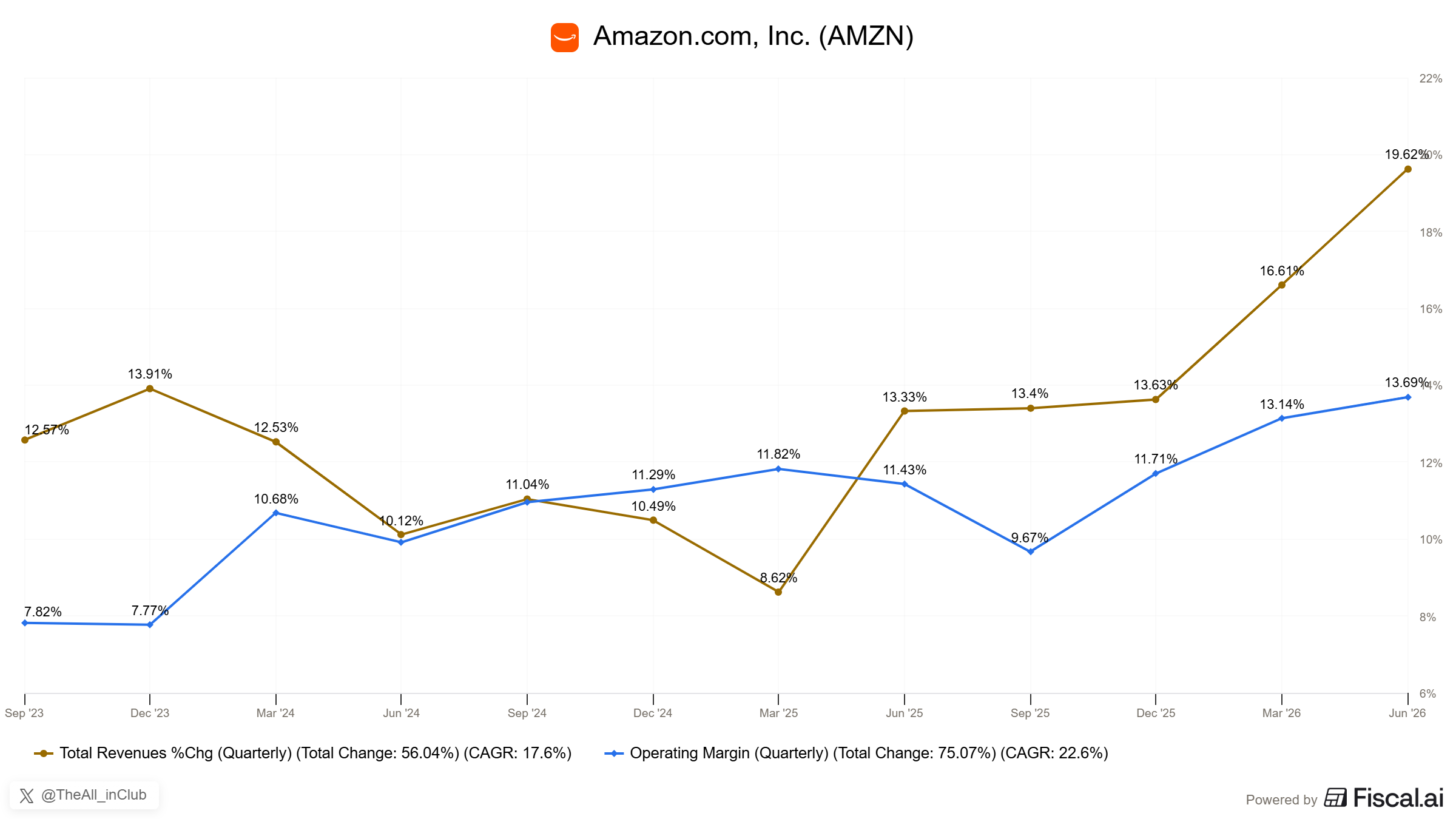
Note that Amazon received two one-time inflows - one regarding tariffs refunds for $1.8B combined, so operating margins should be ~12.8%, still extremely healthy.
I’ll start with AWS, which is booming right now, and I’ll share the numbers, what we think is going on, and why we’re enthusiastic about the ROIC equation, even with heavy CapEx the next few years.
First, the numbers. Revenue growth of 36.7% year-over-year, accelerating for the fifth straight quarter, our fastest growth in 18 quarters back when AWS was less than half its current revenue size. We added over $4.6 billion in revenue quarter-over-quarter, about 80% more than our largest increase ever. Our backlog stands at $496 billion, growing triple digits year-over-year.
AWS is now a $169B annualized revenue run rate business, which, for perspective, would place it 24th on the Fortune 500 list if it was a standalone company. Our chips business now has an annual revenue run rate of over $25 billion, growing triple-digit percentages year-over-year. Our AI revenue run rate climbed significantly QoQ, and is now also over $25 billion, growing triple-digit percentages YoY.
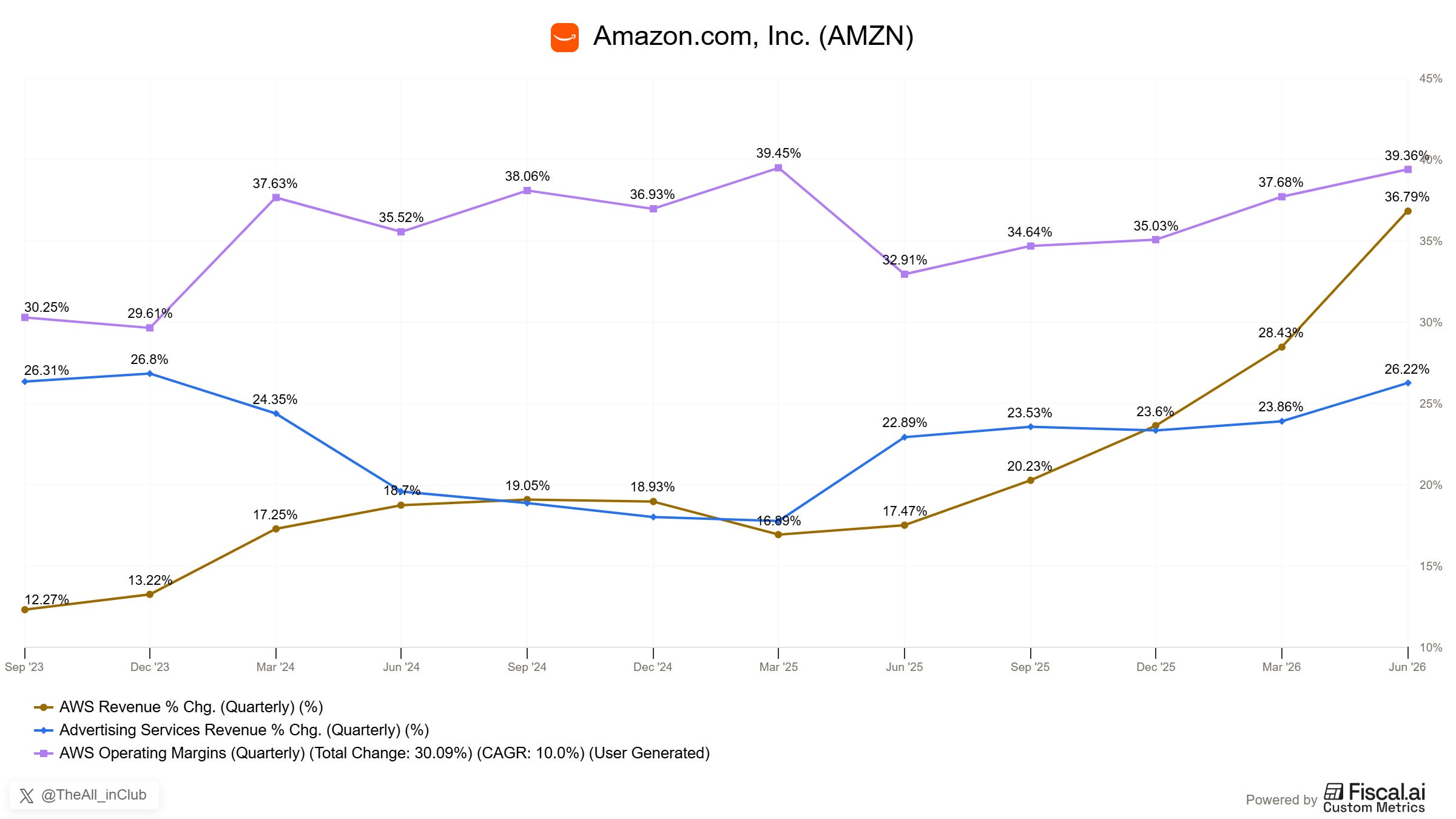
Revenue growth continues to accelerate, margins to expand, and advertising - due to AI, is also accelerating. Clear AI ROI from rental to usage, and Andy explains why the cycle is far from over, despite Wall Street skepticism.
In addition to leading model building and inference services, customers need easier ways to build, run, and leverage agents. For example, even after you've built an agent, you have a lot of muck to worry about. A production agent needs somewhere secure to run, memory so it holds context, an identity so it can act on a user's behalf, tools and data to connect to, and a way to watch what it's doing once real traffic hits. Stitching all that together reliably is hard, and it's stalled many production deployments.
Amazon will increase its CapEx once more this year and probably for the years to come, stating that demand for 2028 is “striking”. Will the market hold, and will this convert into real revenues by then? I do not know, but I don’t really need to. Those are bullish signs and the market should continue to price optimism, not because we are in a bubble and investors are stupidly bullish, but because data is bullish with no end in sight for concrete ROI. That’s all we need to know short term.
Regarding current position,
Microsoft is more of the same. I could go over each number with QoQ comparisons, but the conclusion would be the same: more demand, increasing margins, clear cash generation a few years after CapEx cycle with longer lifespan for their hardware.
Once again, the only question left is: does AI have ROI?
I still don’t have an answer to that and still don’t need one yet. What I need to do is gauge the market’s optimism, have a tight risk management, and be involved on the verticals it likes, while leaving behind the rest.
I had a position on Microsoft but it hit my stop loss. Thesis was on point, but timing was wrong; it happens sometimes. The demand zone was clear, and I marked it a few times already.
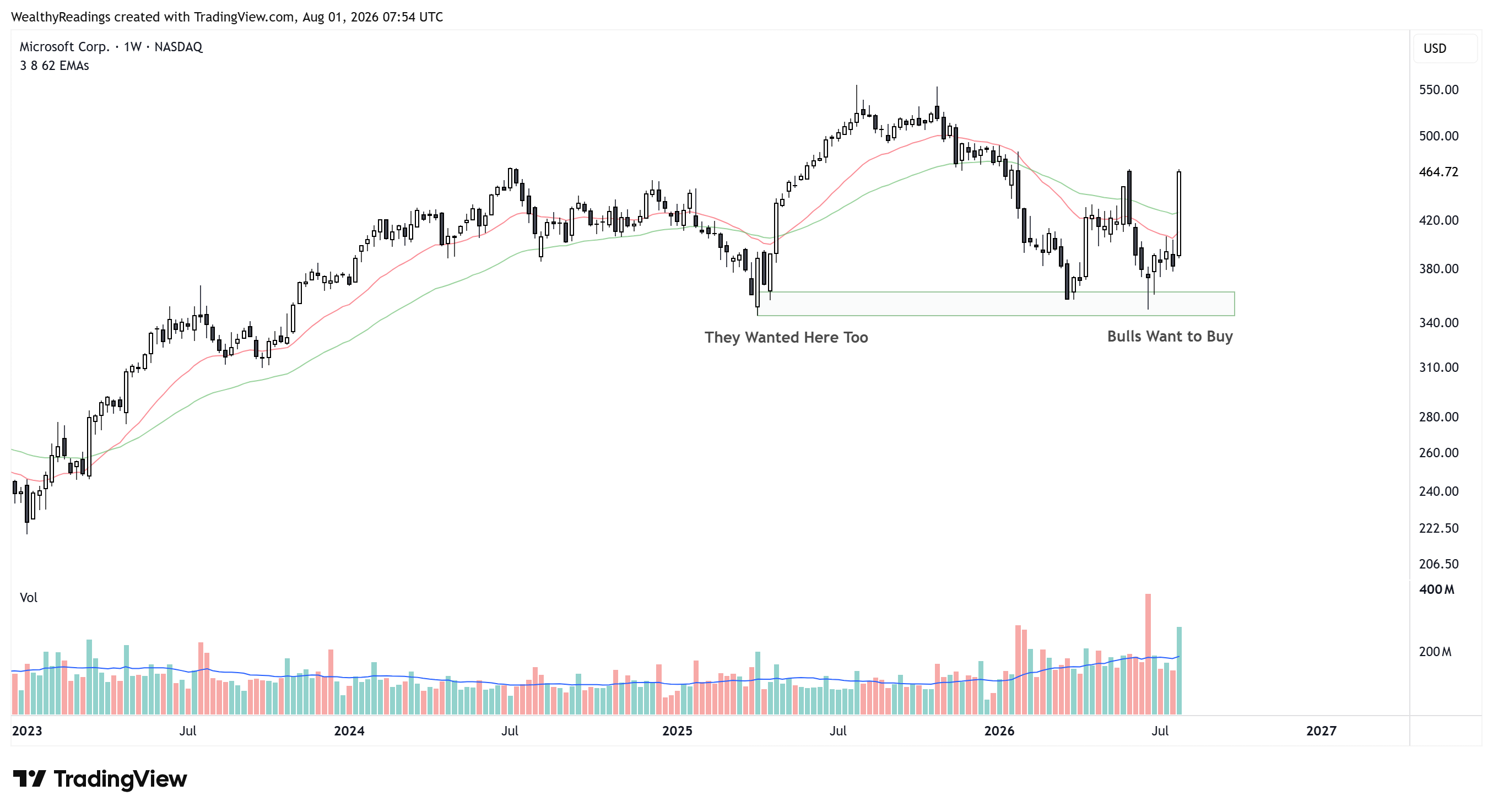
Now, one position stopped doesn’t mean we shouldn’t try again when conditions get better, and they now are. The stock hasn’t pushed above its current high; these last two days were a great sign, but I’d expect the market to give the best opportunities in the weeks to come, not just yet.
In MSFT’s case, this would be a retest of daily averages, with anything below $450 being great value, depending on how aggressive you want to be, with the W50 sitting at $430.
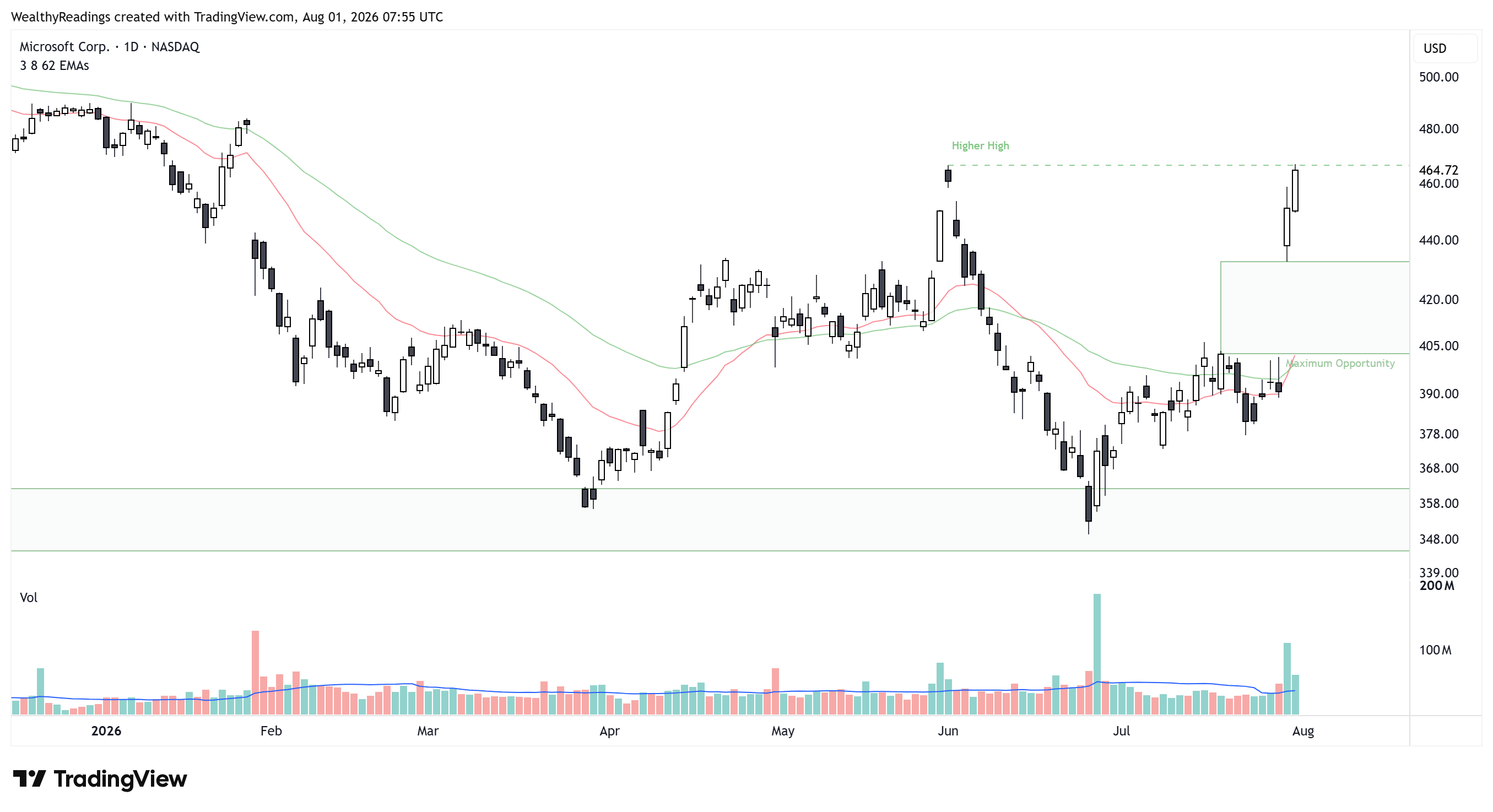
This stock hasn’t been the strongest these last months, but as the market is rewarding compute lately and with clear ROI from CapEx, Microsoft - almost a cloud pure-play, could become a leader in the next months.
In brief,
The takeaway is extremely simple. Compute demand is through the roof, supply limited for some time according to every major compute provider, delivering ROI, and they are all looking to build more. Not really bearish…
Now that we know that, the logical sector to benefit the most from this is AI hardware.
Silicom Is Cheap
I am not one to write overly confident bullish articles, nor to be cocky. But it becomes hard not to be when it comes to Silicom.
Double-beat with expanding operating margins, raised FY26 guidance from ~$82.5M to $94M - a 14% increase from last quarter, guiding Q3-26 to 66% YoY growth, and non-GAAP profitability H2-26 - earlier than I or management expected.
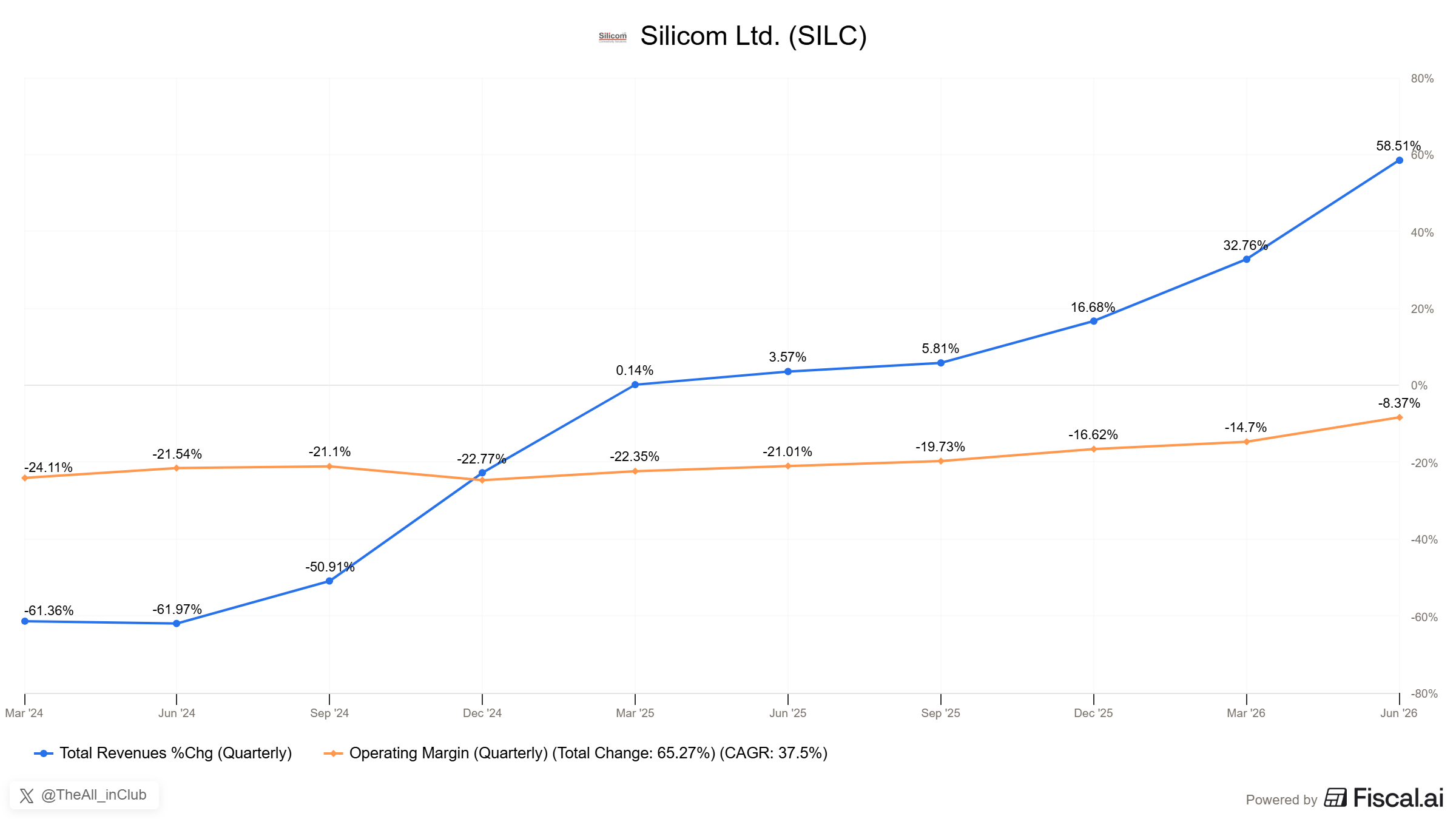
This trajectory was our exact bull case, coming from increasing demand for optimized networking solutions or inference, but also classic networking which requires to be upgraded in an AI world.
Management expected to win between 7 & 9 designs this year and won 7 in six months. The pace of demand from new and current clients, for new and current designs is accelerating, mainly for AI.
Why? Because there are no alternatives to FPGAs to improve networking connectivity. Because adaptability is key in today’s hardware world as everything changes so fast. Because constructor lock-in is a drag in many situations which require optimization.
if you're doing an ASIC, you are locked down for many years, and if you're doing it on FPGA, you actually can update all the time, and as models progress over time, you can actually take all the new goodies that you have and all the industry that is doing smart things every day and put it into your FPGA and actually run models quicker and better than what you did yesterday.
Seeking to move away from vendor lock-in, the customer decided to replace its existing proprietary switches from an incumbent industry leader with Silicom's open white label switching solutions.
each successful win opens the door to the next, with satisfied customers coming back to us for additional products and additional use cases.
This is Silicom’s timing of opportunity, exactly as expected.
On the AI inference deal, We knew Silicom was in discussion for two products (an AI-NIC solution and an FPGA-based solution already in PoC). The question on my last write-up was about which of those converted to the design win and production orders announced last month.
Additionally, we successfully customized an AI-NIC solution to meet the customer's specific needs, delivered the first unit to the customer evaluation, and are preparing for initial deliveries of this customized product per purchase order received from the customer, a leading AI-Inference ASIC and infrastructure vendor.
It seems the production order comes from the AI-NIC solution, not the ongoing PoC for the FPGA product. This order is expected to generate between $3M & $4M for 2026, with 2027 “much higher” while the “multi-thousand units” potential FPGA order hasn’t yet been confirmed. It might never be, as the PoC could be unsuccessful, but would be net additive if it were, while management could be in discussion for at least one more (new?) AI inference product.
In parallel, we are expanding our AI-Inference product portfolio, and based on orders secured, we are now developing a completely new bespoke inference-specific solution.
This comment could also be about the FPGA solution, so I’ll keep my expectations low and assume the AI-NIC solution sold to an ASIC manufacturer was converted into a production order, while the FPGA-based solution is still ongoing PoC. This situation is already extremely positive as selling NICs to an ASIC manufacturer largely confirms my bull case and the importance of NICs for inference already.
I also want to note Silicom implication in Quantum cryptography, which will require specific hardware for which they’re already in discussion with clients. This is another vertical that will drive growth in the future, although AI remains the #1 opportunity.
Increased revenues, increased demand, involved in AI inference, improved margins, profitability expected in the next quarters. The market prices stock based on potential future cash generation, which comes from accelerating growth, expanding margins, or both. Silicom is combining both, just like Lattice - which I already took as an example. The market rewarded its stock with an optimistic 30x sales.
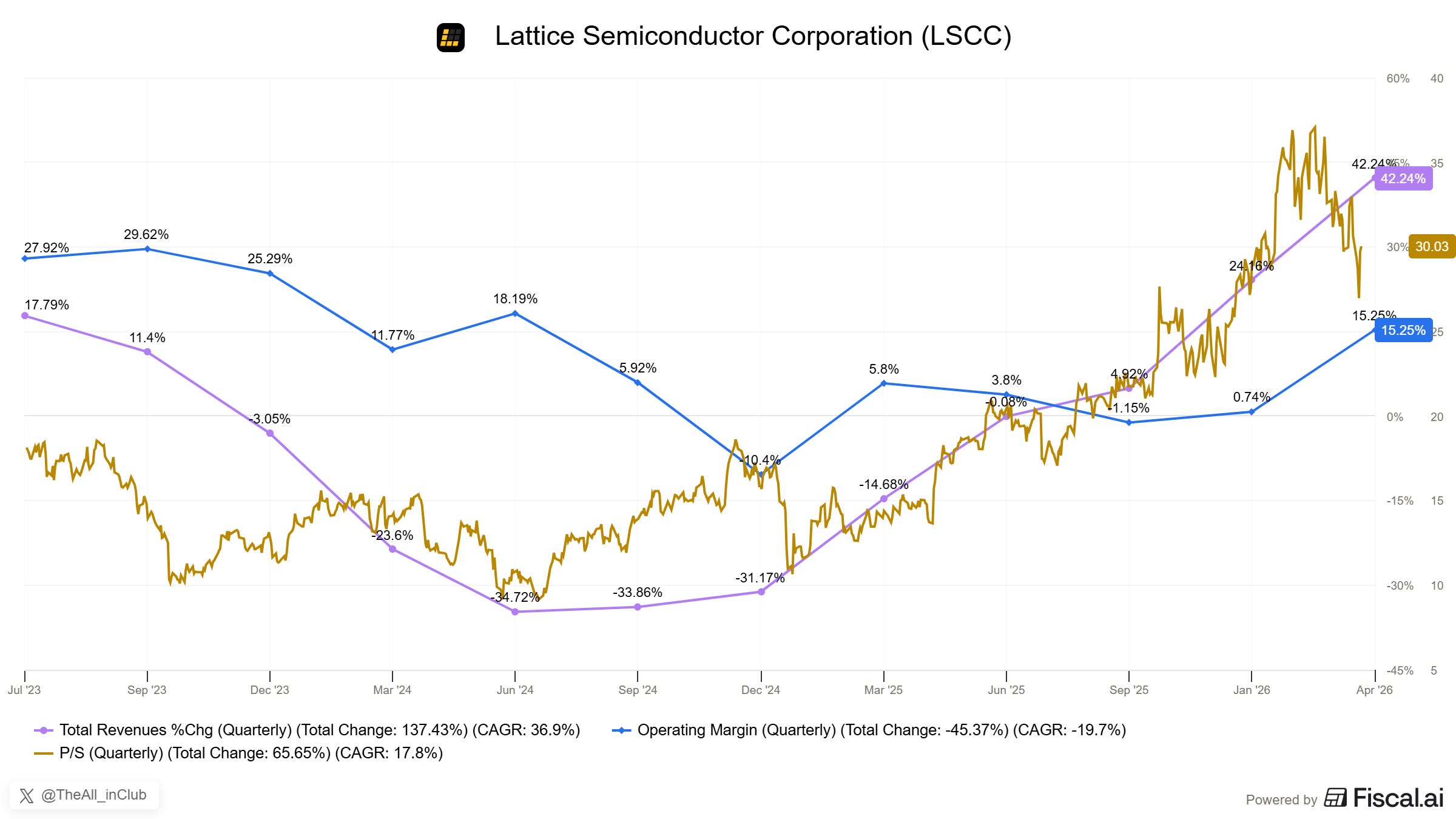
Today, I believe Silicom’s only bear case at this price - besides black swans, is visibility. For a stock to rise, others need to buy it. For others to buy it, they need to know it. How does that happen?
Social media awareness.
Analysts’ coverage.
So far, only a handful on X talk about this name and one analyst covers it with a $60 price target shared before earnings - probably going to raise it after such a print.
As for investing,
Axt Inc
Great earnings as well and a 64% performance in two days… Just like Soitec, AXT is one of the best photonics play as they make the wafers for lasers; a key player very high in the supply chain, which confirmed the same kind of trend:
Continuous growth acceleration and margin expansion with massive demand, above current supply, which justifies expansions, while less than a handful of companies capable of selling comparable wafers.
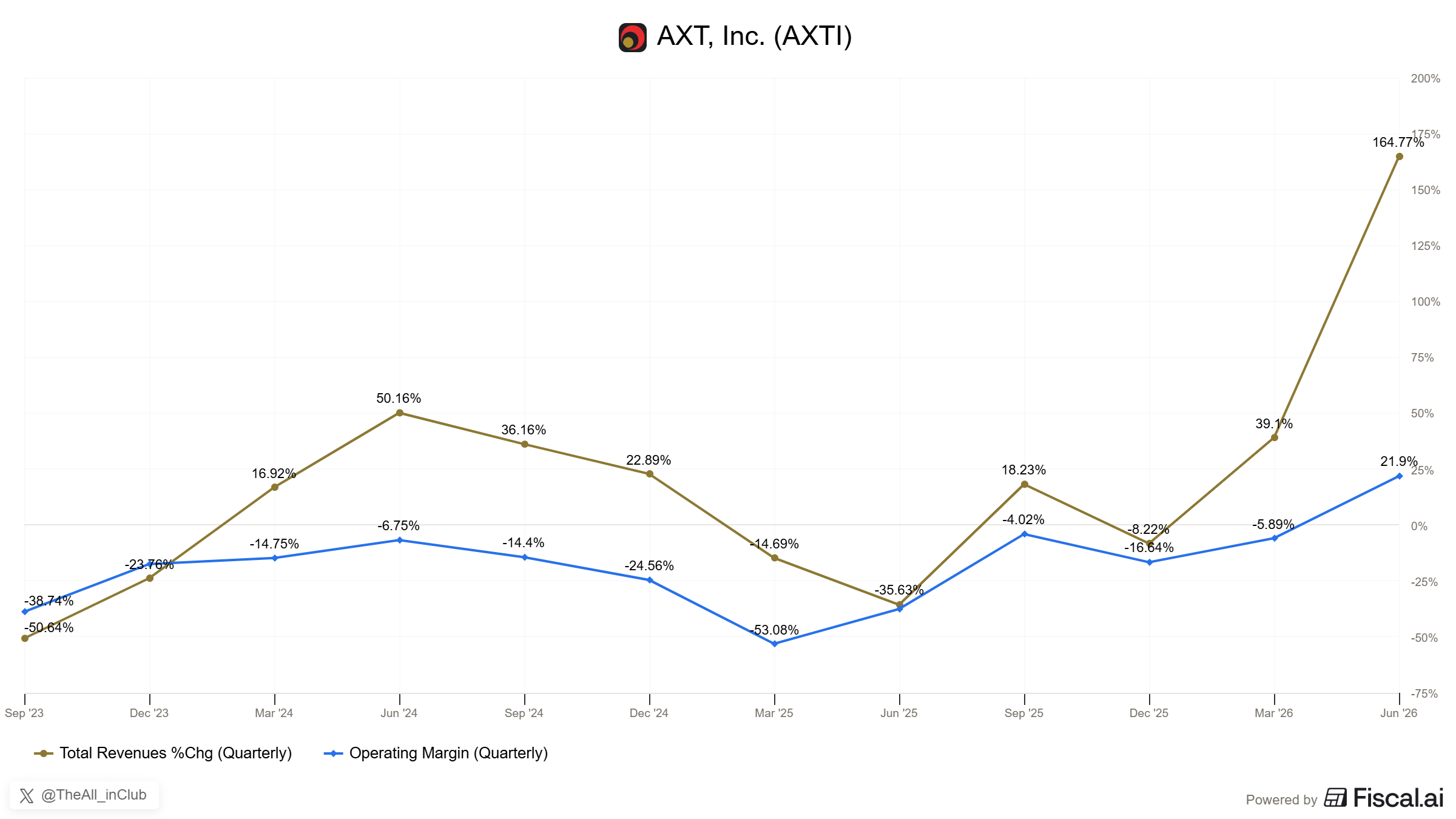
The company signed a contract with Coherent, another fundamental confirmation, and shared that Chinese demand was accelerating which is great as it comes with less geopolitical tension - AXT and its producers are located in China and need permits to export outside of China.
One of the best photonics plays on the market, with an extremely interesting price action.
Bloom Energy
Stock price follows future potential cash generation, which can happen two ways: increased revenues or expanded margins. Just like SIlicom, Bloom does both at the same time and confirmed the trend was strong and for longer.
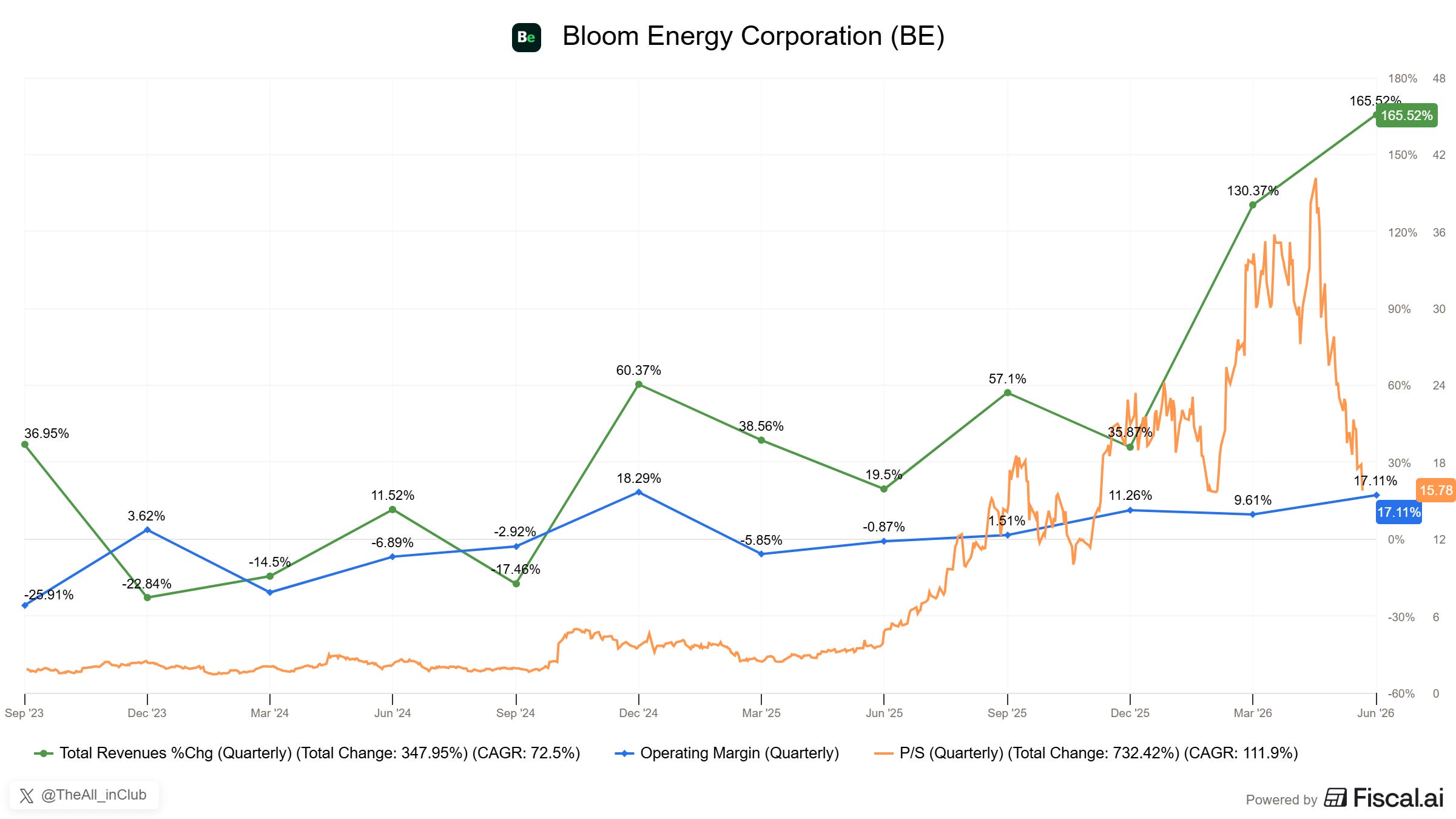
Energy was and remains the main AI bottleneck, and both storage and behind-the-meter generators are the new go-to solutions for the years ahead.
New customers are arriving at a faster pace than ever. Landing a mega customer used to take us years, a moat that protected the incumbents. Now, the proven success of our technology, coupled with an increasingly urgent need for efficient, clean, and reliable power, has collapsed the time from first engagement to first order. Because we can book, ship, and convert orders to revenue inside the same fiscal year, that demand shows up in results now, while also adding to and diversifying our backlog. Notably, just this year, several customers who had alternative solutions in place abandoned them and came to Bloom.
I see Bloom exactly like I see AXT: extremely interesting company and price action.
There are no questions of what Bloom is, and can become.
Disclaimer: I am not a licensed financial advisor, analyst, or broker. This content reflects my personal opinions and investment decisions for informational and educational purposes only. I hold positions in securities discussed and may buy or sell without notice. Nothing here constitutes a recommendation to buy, sell, or hold any security. Past performance does not guarantee future results.
Always conduct your own research and consult a qualified professional before making investment decisions. I accept no responsibility for any financial losses.