

Two weeks ago, my Substack book was down ~30%.
Today, it is back at all-time highs.
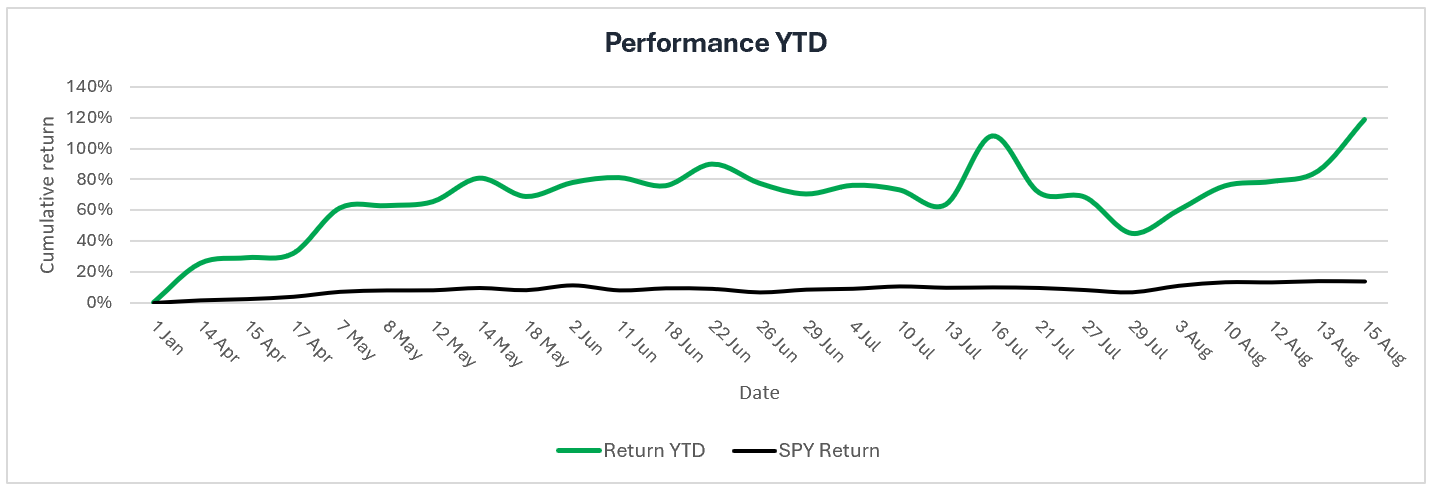
I didn’t call the bottom. I didn’t increase margin or use options. I simply went back to following my system: cutting weakness and concentrating on the strongest setups, increasing exposure as winners prove themselves.
The recovery came fast because the market gave us exactly what we were looking for: strong trends, clear support levels and earnings that confirmed the thesis. The key wasn’t knowing when the bottom was. It was being willing to act when the market proved us right, and cut losses when things got hard.
That is what I’ll review here: what happened during those two weeks, which positions drove the recovery, which decisions worked, which ones didn’t. And more importantly, I want to show why the system mattered more than any individual stock.
The warnings were here,
June was an obvious top in retrospective with two of the most important indicators flashing red: euphoria on social medias and extended stocks/indexes. This is when I wrote this article titled “The Breather is Coming”. Telling.
Not like I didn’t see it coming.
And yet…
I broke my own system
The drawdown wasn’t caused by one bad investment. It came from a combination of mistakes.
First, I overtraded. I had margin on and kept trying to buy setups while the market was telling me nothing would work. I’d understand why weeks later, but the reason didn’t matter. The signal did. When good setups consistently fail, the market is telling you something. Environment comes before individual stocks.
Second, I didn’t cut some losses quickly enough. The space sector corrected before the rest and I thought those names would bounce earlier. They did, but a month and a half later. That wasn’t useful. I had to take the trades; I didn’t have to hold them.
Intuitive Machines is the clearest example. I bought ~$20 on a W50 retest, with a strong narrative, a strong sector and a clear technical setup. I don’t regret taking that trade. It met all my criteria.
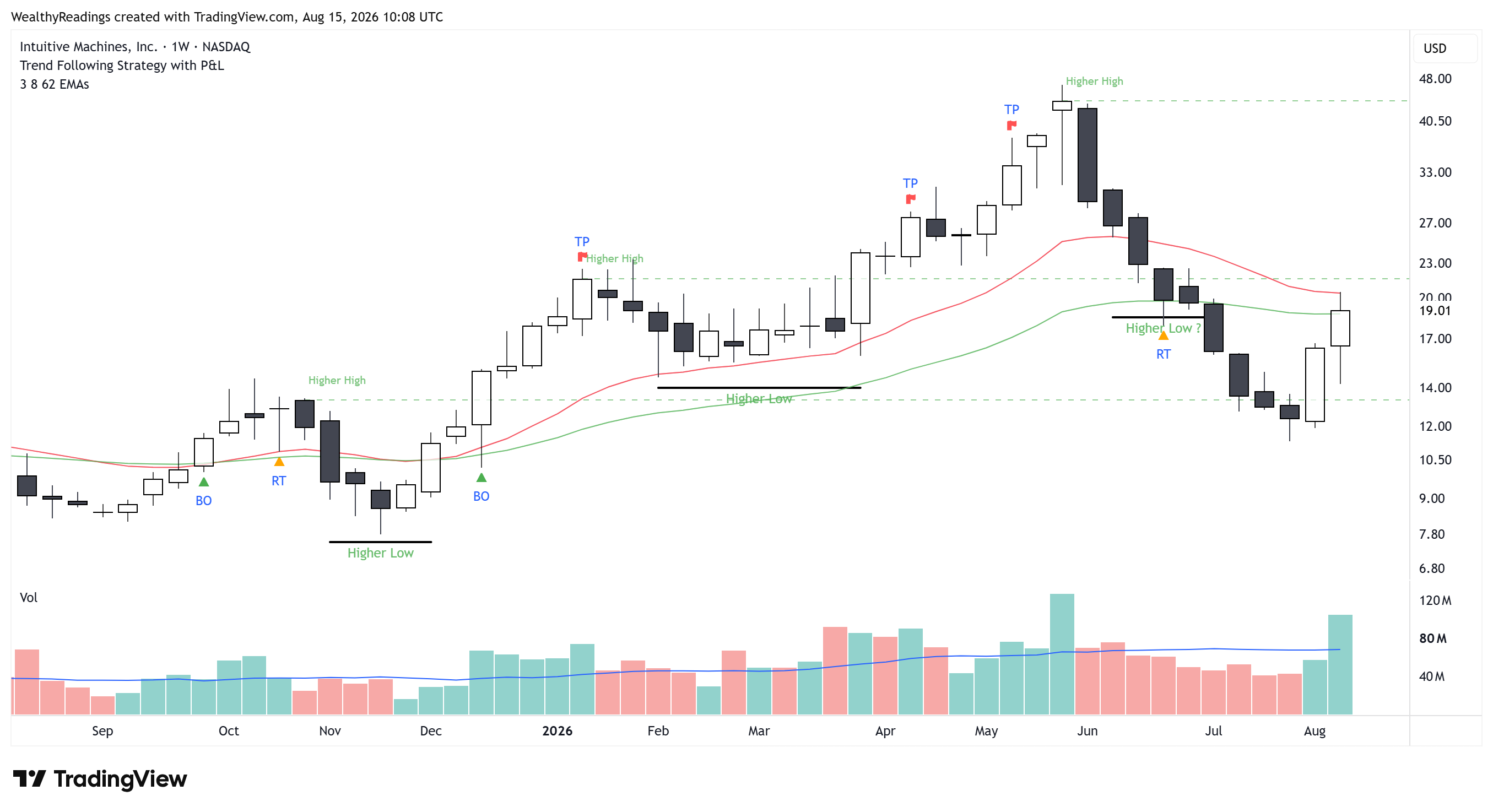
What was wrong was waiting until $14.70 to sell it, turning what should have been a ~11% loss following my system into a ~27% loss. Buyers didn’t step up where they should have - on the wick below the W50, so I should have listened. If buying zones aren’t bought, stocks go lower.
Third, margin. This one is more personal, but making those two mistakes while using margin obviously multiplied their impact…
The important point is that none of those mistakes required better stock picking to fix performance. They required better discipline.
Then the market changed
The drawdown had no bounces. Constant selling. Normal downtrends usually come with bounces and their absence was the most important information. Something happening. We just didn’t know what - we now do.
It marked the bottom as the selling pressure disappeared. I couldn’t be sure it was the case then, but for sure the risk reward had shifted. During inorganic selling, when the objective is reached, the selling pressure disappears while the strongest names were back at key supports. Back then, I wrote,
Talking about market mechanisms, chances are we’ve seen the bottom. This doesn’t mean we’re back in an uptrend, but means we’re good to buy again. And I believe the next few days will be key to the rest of our year’s performance.
Most of the selling pressure is behind us. Leopold has nothing left to sell, Citadel is now holding the chips and might - should, sell some, but not everything considering Leopold’s portfolio quality and latest earnings. The portfolio might be a bit outdated, as he had to sell some holdings, but its quality is undeniable.
That distinction matters. I didn’t need confirmation that the bottom was in. I needed confirmation that it was becoming worthwhile to buy again. I already had realized my mistakes and fixed them. I had cut losers, reduced margin and freed liquidity. I was then only looking for the best setup.
That was the turning point.
Concentrating on the winners
Nebius had already given us a clean W50 retest. Akamai was back at its W50. Soitec and Silicom were holding their trends. All of them were mentioned with subs. But one setup stood above the rest: Applied Optoelectronics.
The stock was retesting its W50 within a clear uptrend, with clear tailwinds and strong fundamentals/sector. I bought heavily.
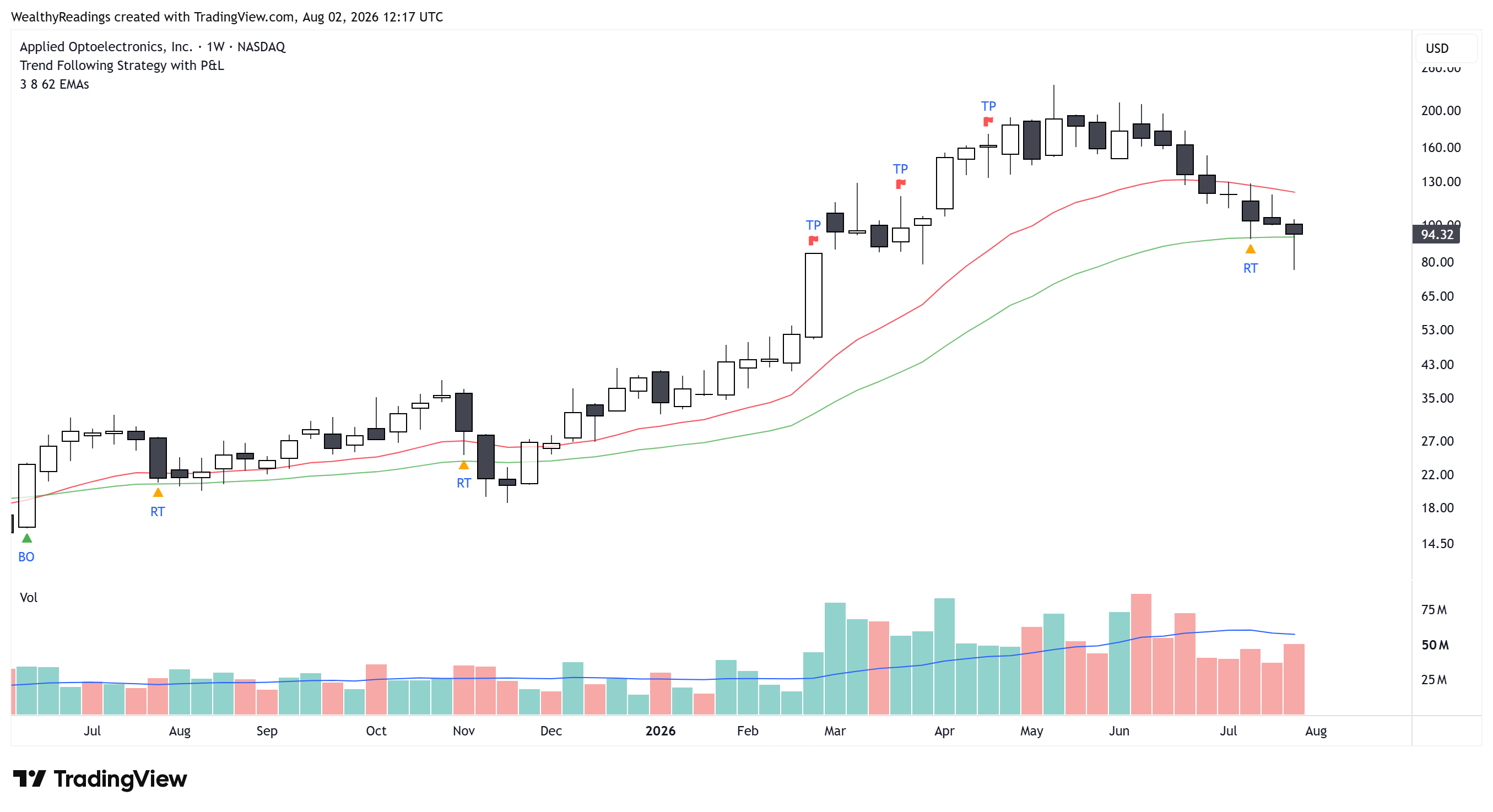
Two weeks later, AAOI is up ~67% from that purchase.
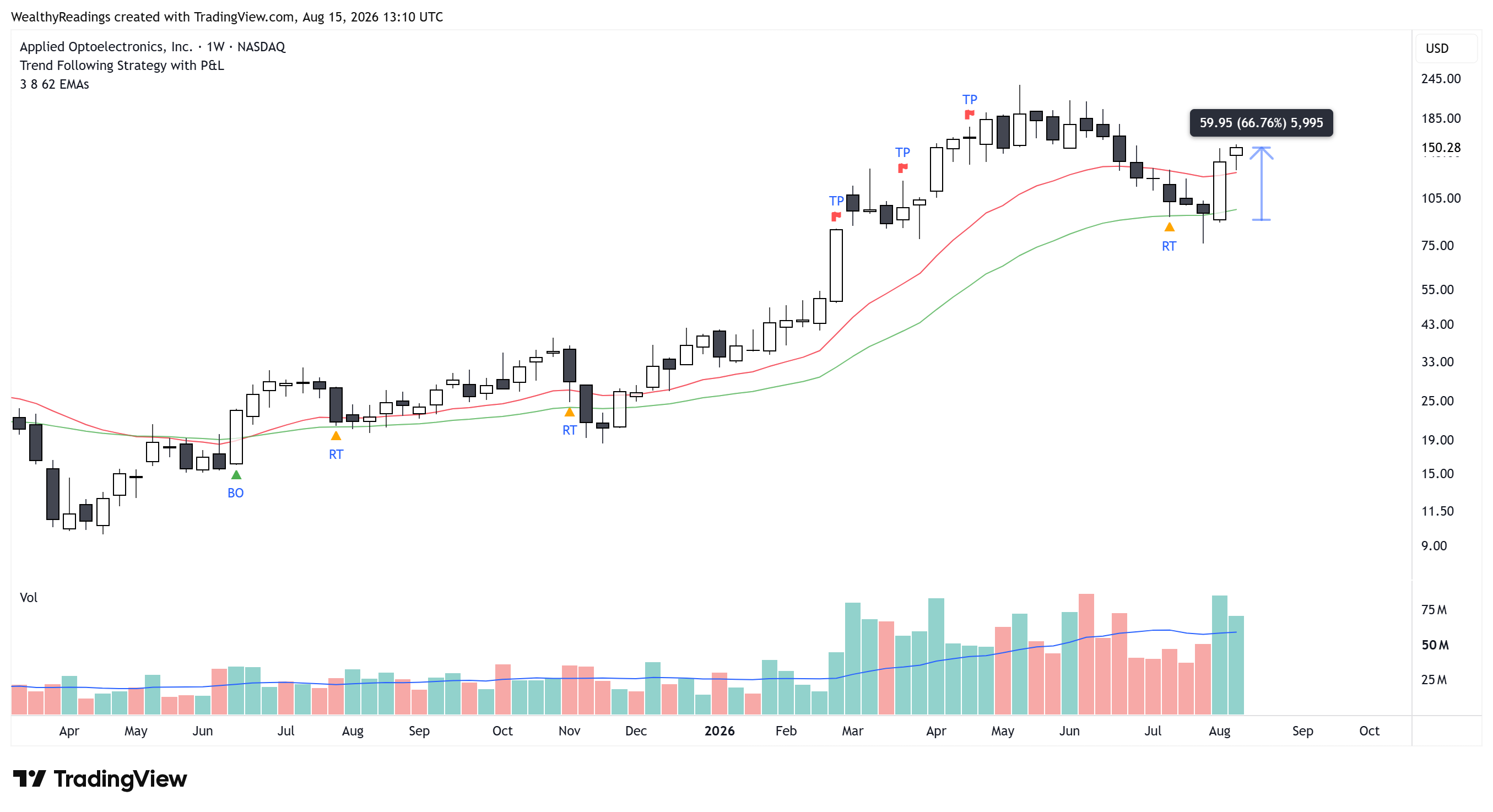
This is where position sizing becomes more important than finding the best stcok.
AAOI wasn’t necessarily fundamentally superior to every other position in the book. But it was offering the better setup at that moment. I had a clear and very positive risk reward.
That’s the kind of situation where I go big.
The risk was clearly defined, not making the same mistake than Intuitive Machines. If buyers didn’t step up on this wick ~$76, I’d be out. A ~10% risk for a multiples in potential gains, assuming the trend holds.
That is very different from blindly buying a stock because I like the company.
You don’t need every trade to work
This is also why I don’t care about having a perfect hit rate.
The same week gave us AAOI HLIT PATH AXTI BE ON and a few more opportunities which I shared with subs. Some worked really well, some never gave the entry we wanted. Others, like Intuitive Machines, struggled to get their W50 back.
That’s alright. A ~10% loss is manageable if your winners can compound at multiple of that.
This is also why I don’t spread liquidity across every stock I like. If the market gives me ten decent setups, I don’t need ten positions. I just want ones where the narrative, trend, fundamentals and risk/reward are strongest.
The book’s recovery wasn’t one lucky trade, but a succession of actions after a succession of mistakes. I realized them, understood what needed to be done, and focused back on my system. I cut weakness, kept liquidity available, waited for the market to become “easy” again, bought retests and put size on the setups that deserved it.
The system
The last few months helped me reinforced my system.
Environment → strongest names → R:R setup → position size.
If the market confirms the thesis, I want to hold as long as possible, trim on extensions and add rather than search for a new position. Liquidity is always better spent on growing winners than new positions.
If the market doesn’t confirm, I cut weakness. I have no need to hold a stock buyers do not step up to buy where they should. There’s better elsewhere, or maybe it is time to slow down.
Nebius remains the prefect example to illustrate.
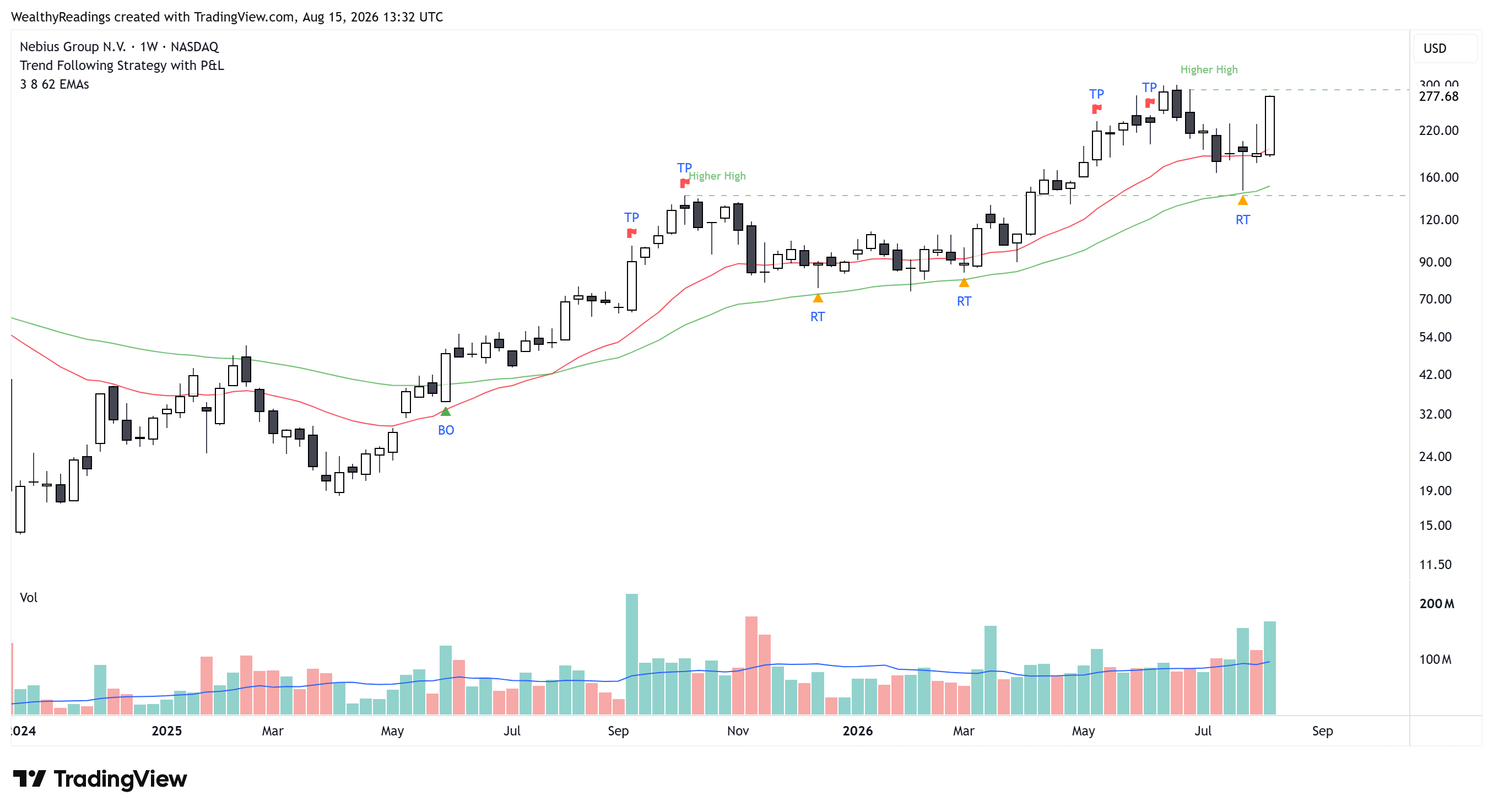
Breakout on clear volume marked “BO”. Clear extensions to trim marked “TP”. Clear W50 retests 40% lower marked “RT”. Repeat.
The system isn’t designed to eliminate losses. It is designed to make losses as small as possible and the wins as long as possible while increasing size on winners.
What the recovery actually proves
AAOI was a large contributor of the bounce, but the real contribution came from my own refocus into a winning system after having lost it in euphoria. Previous winners compounded while my refocus found new ones.
Nebius gave an excellent W50 retest. PATH and HLIT bounced really well. Akamai gave many buying opportunity to grow a position. The market started rewarding the setups that failed in July, and I became increasingly aggressive as it happened.
That is the part I care about.
The recovery wasn’t about becoming better at predicting what would happen. It was about recognizing that the environment had changed and adapting to it. When the market was difficult, I should have been smaller and more selective. When it became easier, I needed to do the opposite.
Press during easy times. Slow down during hard times.
It sounds obvious. It is much harder to actually do it when your portfolio is falling.
What happens now?
My stock picking book is back at ATH. But the return isn’t what matters most. What matters is that I lost the system during the drawdown, recognized it, went back to it and improved it.
I don’t need to predict the next correction. I need to recognize when the environment changes. When the market is difficult, I slow down. When it becomes easier, I need to press. Cut weakness, let winners run and concentrate liquidity where the market is proving me right.
I don’t need anything more complicated than that.
If you are interested in an actionable setup, this article details my latest position which is still buyable. If you are interested in the position planning, this article goes over the space sector bounce and two great opportunities. If you want to receive transactions live alerts and my buy target spreadsheet, you should consider the Founding Member subscription.
Disclaimer: I am not a licensed financial advisor, analyst, or broker. This content reflects my personal opinions and investment decisions for informational and educational purposes only. I hold positions in securities discussed and may buy or sell without notice. Nothing here constitutes a recommendation to buy, sell, or hold any security. Past performance does not guarantee future results.
Always conduct your own research and consult a qualified professional before making investment decisions. I accept no responsibility for any financial losses.
Great job, interesting read and well done for staying disciplined when things went well rather than chasing to regain it!