

I do not have all the answers.
That’s terrible marketing…
Most investing content is built on looking so certain that readers assume you know better. No one knows better. Every investor is constantly learning, and that’s what I’ve decided to build my Substack around: constant improvement, out loud.
Building a framework that works, publicly.
So I share the diagnostics, the successes and mistakes, to strengthen a system that’s performing well, but isn’t yet perfect. This is what today is about: the last month, the mistakes I made, and the measures I’m putting in place so they don’t repeat. I’ve identified two clearly.
To talk numbers: my portfolio was up ~160% YTD at the top in May. It’s up ~60% today. That is NOT normal, it shouldn’t have happened. A 60% YTD is still a massive outperformance over the S&P ~8%, and it should be seen as an excellent year - which it is. But the subject here isn’t the returns. It’s the process that let me give back so much in such a short timeframe.
I’ve diagnosed my own mistakes before - notably overtrading, which I’ve corrected; I haven’t done it since. That one was about me, today is about improving the system itself, to protect my net worth in riskier environments like today’s.
More Wars, More Fear
A quick word on what’s been happening.
Two main reasons for the violent sell-off in risk these last weeks. First, AI hardware was extended and took most of the drawdown while most were heavily invested. Second, the framing changed: few of us expected the Iran/US conflict to start again while peace frameworks were already on the table. And yet, here we are.
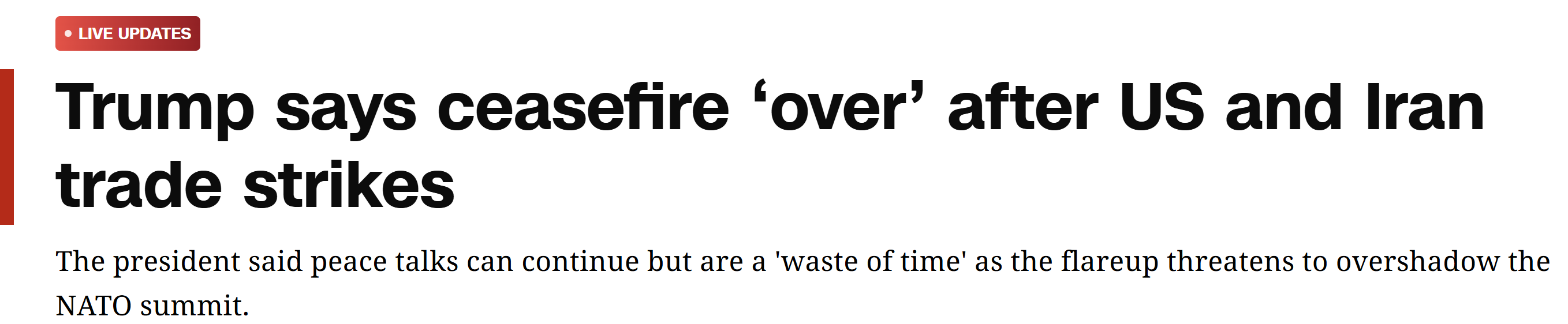
You know how this works. Black one day, white the next. But the risk is different now; the market is extended, so investors aren’t in the state of mind they were six months ago. They’ve made tons of profit and intend to keep it. We’re in a “better to sell first than last” environment, where risk isn’t a short-term opportunity but a place to pull profits from and wait.
So how do you avoid giving back a year’s gains in a month?
Below, I break down where I went wrong; the two specific mistakes that cost me most - including the one I estimate cost me half of my drawdown, plus the rules I’m putting in place so they do not repeat and how I’m managing my book as the market shifts.
Let’s get into what I’ll do differently, and what I’m doing now.
