

There are decades where nothing happens; and there are weeks where decades happen.
This quote from Vladimir Lenin had nothing to do with the markets. It was about how fast revolutions can transform a country, an economy, or a society. But it fits the market quite perfectly.
The last two months were some of those weeks. A massive drawdown, a rapid recovery, dozens of earnings, countless setups, failed supports, and a portfolio going from -30% to all time highs in a matter of days.
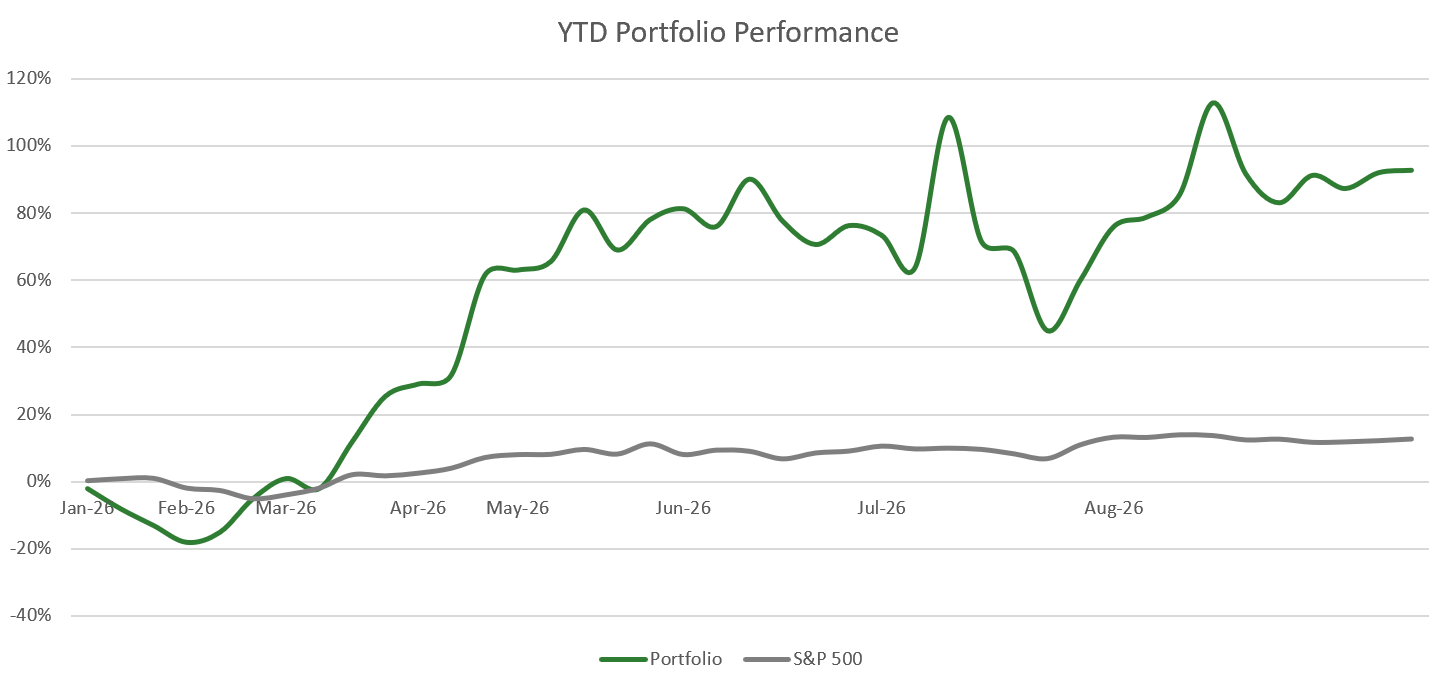
These periods also come with more transactions than usual: letting weak names go, accumulating winners, and buying strong setups, all while positioning the portfolio for the next phase.
That creates a different challenge: not finding more things to do and opportunities to buy, but knowing when to do nothing.
Before starting, if you aren’t part of the chat, you’re missing out on daily updates, market commentary, and transaction alerts. This is where I post all important day-to-day information and transactions, with value added for all subscribers.

Consider joining!
The Biggest Questions Were Answered
Over the last three years, every quarter had a concrete bear thesis.
The first was about hardware. Could GPUs allow parallel computing for intelligence, not just graphics? Nvidia’s Hopper delivered, and the later generations brought leaps of improvement, very rapidly.
The second was CapEx/ROI concerns. Will spending lead to cash generation? This was worsened by debt later. Without accelerating cash generation, companies could end up insolvent at worst, slowing down their future growth at best. It took quarters to have answers. The previous earnings season gave clues. The latest one sealed the deal.
Lastly, the most important of all. Can AI generate final user value? If not, nothing else would matter, as no economically viable service means everything was done for nuts. This is the current question.
The question left isn’t “does compute have ROI?” but “does AI have ROI?”. This won’t be answered by hyperscalers, but by SaaS, as they are the ones consuming tokens to deliver services. Considering the amount of tokens they’re using, I’d imagine they see ROI from it but we are yet to see the real numbers.
But this season gave us an answer.
Salesforce, CrowdStrike, Rubrik, ElasticSearch, Sentinel… They all confirmed one or more of the following trends: revenue growth acceleration, margin expansion, and raised guidance. And all cite AI as the reason for those fundamental improvements.
A few weeks ago, ServiceNow proved that AI won’t disrupt their business, without proving that it’ll enhance it. The largest bear-case fears were reduced while most of SaaS valuation got crushed, and the market started buying those names again as the risk/reward became attractive. It’s now even more so as other companies confirmed this, but also added clear tailwind from AI.
The risk/reward became even better and the market should start to anticipate success. It already did for a few of them.
The Most Important Take Away
Simple.
If SaaS generate ROI from AI, AI spending will accelerate.
If the last link of the chain generates value, the entire chain becomes valuable as every dollar spent on AI - whether on hardware, compute or else, ends up generating value for one and ROI for another.
Palantir is a great example - the only one until now. Their software provides value to their customers, so those increase their spending and new ones reach out. Any kind of customers, for many kinds of usage within different industries. Other SaaS took a bit longer but are getting there now, and we’re yet to see consumer SaaS leverage AI as they should - companies like Airbnb or Duolingo. But they will.
AI SaaS demand increases → Compute demand increases → Infra demand increases.
The market expects continuation. I expect acceleration.
We Already See It, Even if Some Refuse To
Look at Nvidia and Marvell earnings.
The latest narrative was that Nvidia would crumble as hyperscalers turn themselves towards customed chips. That’s not what the numbers show. They show another leg of revenue acceleration, raised guidance, and stable margins.
Why? Because hyperscalers aren’t the only actors anymore.
There is sovereign AI, there are regional AIs, there are neoclouds, there are AI startups at enterprises [...] which represents about half of our business, and that is growing 100% a year.
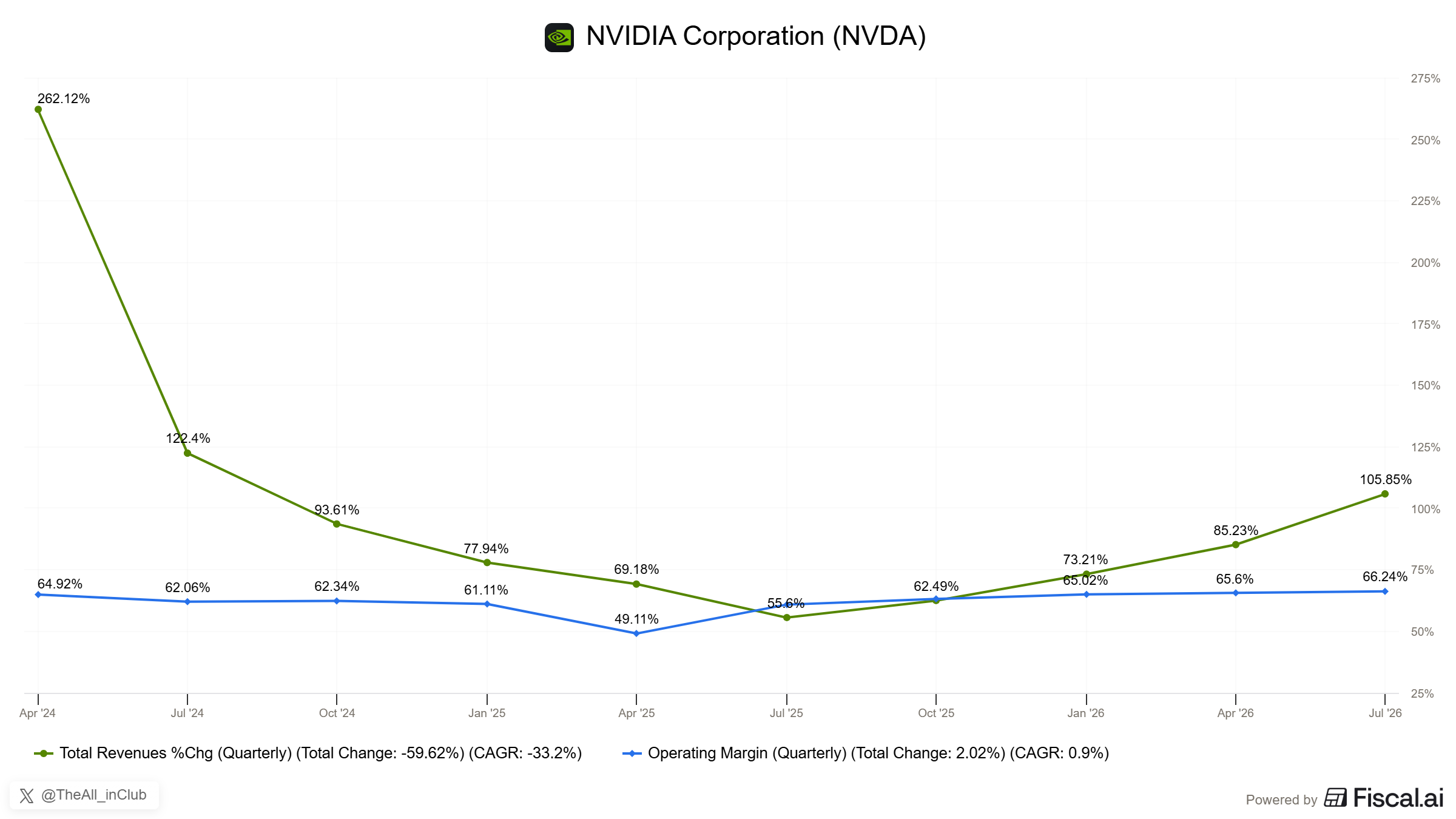
Yes, Nvidia’s losing market share. But that market increased manifold in the last two years, which means a smaller portion of a much larger cake, which they are expanding into with new products - networking, cloud, software, acquisitions & investments…
There is no slowdown.
Marvell shows the other side of the piece as customized hardware accelerates - as expected since months. Record earnings and increased guidance, which reinforces my convictions in most of my current positions, which I accumulated over the last weeks as shared with Founding Members in the chat.
On the optical DSP side, 800 G demand remains strong, while our 1.6 T business is ramping rapidly, a trend we expect to accelerate further in FY 2028. Within scale-out switching, our business remains on track to more than double this year, driven by a strong ramp in our 51.2 T products across a broadening array of customers.
However, the significantly higher bandwidth density required by scale-up networks is best served by bringing optics much closer to XPUs and switches. While the transition in scale-up networks from copper to optics is expected to take several years, with both technologies coexisting, customers are aggressively planning scale-up optics deployments starting as early as next year.
We expect this growth to be driven by both our XPU and XPU-attached products. In XPUs, we continue to make strong progress across current and next generation programs at multiple hyperscalers. In XPU attach, we are benefiting from increasing demand for both CXL and Custom NICs.
No slowdown. And now that we know compute adds value at the end of the chain… Why would it? I stick with my opinion shared a month ago, with stronger convictions after this month’s earnings.
We are going to see a bubble, but this isn’t it. A bubble is built on endless optimism, and blowing up a leveraged fund by selling amazing earnings showing clear ROI from AI, revenue acceleration, and margin expansion isn’t really what endless optimism looks like.
As for how to position yourself for this acceleration, the good side is that the market is giving you more opportunities as hardware isn’t the only benefactor of AI spending anymore. I’d expect it to remain the leader even if most are priced to perfection, some aren’t, and perfection’s temporary as analysts suck at predicting. They’ll continue to beat and raise as the cycle accelerates.
Software continues to show signs of reversal in both price action and fundamentals. Cybersecurity were the golden goose, but a few are only starting their uptrends now. Data providers and optimizers are also starting to show demand, final-product SaaS too… Liquidity will flow to them, and not being part of it would be a mistake.
Crypto continues to show signs of revival, even though it doesn’t fit into any of the current narratives. Liquidity goes where it chooses to go.
Those are the strongest sectors today. I’m positioned for the three of them, with very strong foundations for the months to come as the cycle continues.
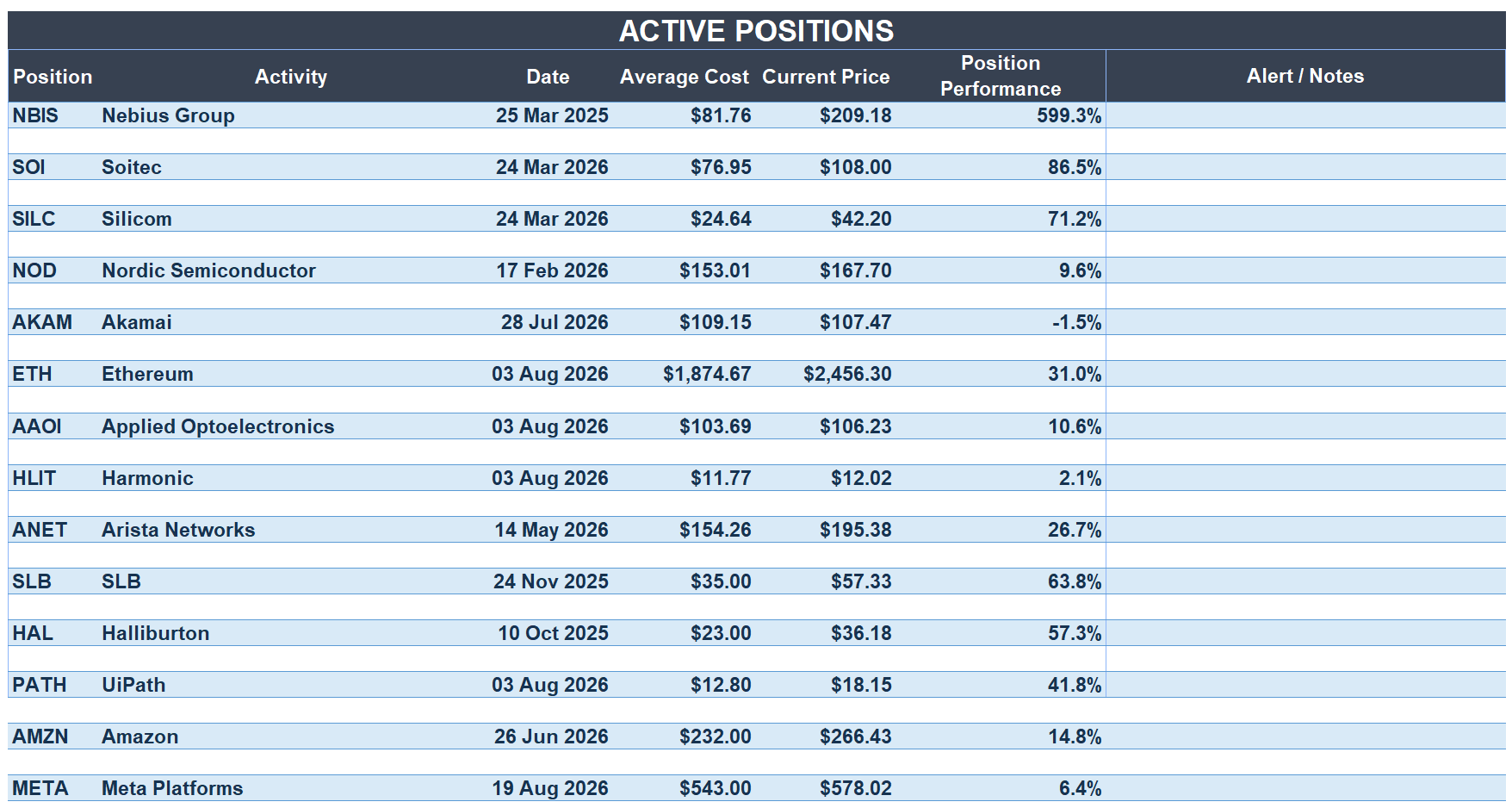
From here, the best thing to do for me is nothing.
More Activity Means Less Returns
Downtrends are hard to manage. But uptrends are even harder.
When you found your winners, the best thing to do is just letting them run. Your job as a stock picker isn’t to constantly manage positions or look at every green candle, but to find the few stocks that will outperform the market, build large positions, and let them run as long as they behave, while cutting the bad seed fast.
This is less complicated than it looks; the hardest thing to do is leave your ego and pre-conceived ideas of what “investing” is behind. The market is what it is, not what you want it to be. Accept some facts; it’ll help you let money compound.
Valuation doesn’t matter. It is a personal opinion on what “should be” that you try to apply to a voting machine based on sentiment and billions of daily votes. You eventually need to accept that you don’t know better than the market… Even if you did, you’d still lose. An even harder and broader truth is that none of your personal opinions matter… I know, it’s a hard pill to swallow. The sooner you accept it, the better.
Price action matters. It doesn’t make you less of an investor to learn and use it. In a game based on votes, ignoring the visual representation of the voters is pure ego. I’m not talking about Ichimoku and other shenanigans. I’m talking about price and volume, about the factual data of what people buy, where and how. It’s much better data to use than valuation, as it doesn’t rely on a personal opinion.
Weakness compounds. Just like strength. I’ll give you a concrete examples below.
Sizing is key. What matters to me is to increase my wealth, not invest $1,000 on a speculative asset that could 10x. I’d end up with $10,000. Cool. Not life-changing money. You’ll make money on large positions. Not small ones.
Less is more. Large positions mean fewer positions. And that’s ok. You don’t need to be involved in everything. You don’t need to compare yourself to others. You just need to own large positions in stocks that beat the market. That’s how you increase your net worth, which ultimately is the only thing that matters.
Weakness Compounds
One of my Founding Members had a comment on Tempus a few days ago, stating that the stock was up ~40% since we cut it for weak price action. Factual. But there’s more to it than just a performance number and while I answered, I thought it would be a great case to look at in an article.
I sold Tempus on July 21st for a 7% loss as it broke below its W50. I’d be up ~22% today if I had held my position, but I also would have gone through a 30% drawdown with a stock breaking all of its uptrend supports.
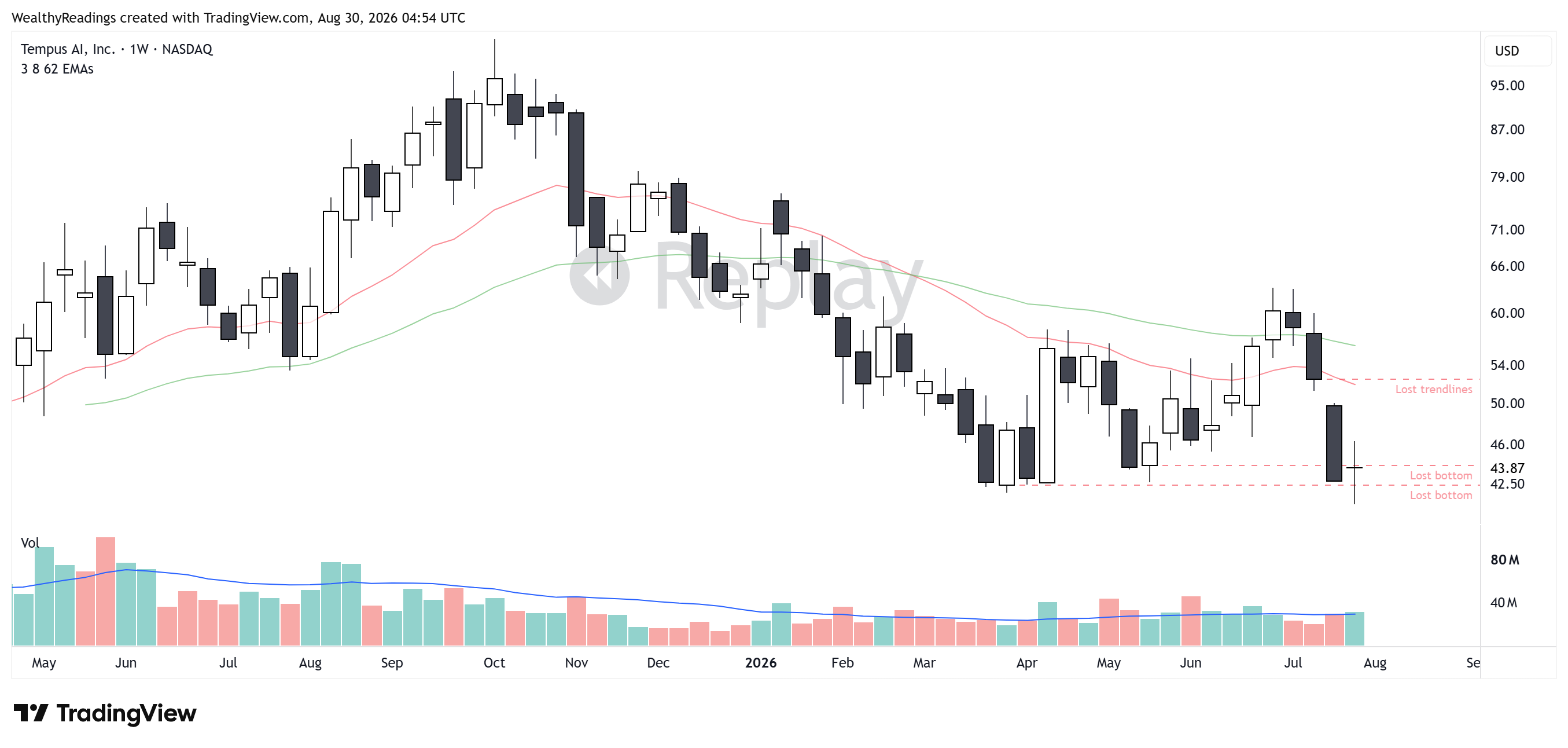
Holding this stock here is “I think I’m right even if the market tells me I’m wrong and that position negatively impacts my net worth by 10%”. This is a hard psychological situation to be in, and while many could think “let’s see, whatever”, I’d argue this is real gambling. Capital preservation is too important to behave that way.
Then came positive healthcare news and Moderna’s positive Phase three skin-cancer results, giving the sector a major boost. Tempus jumped ~70% from its bottom, reclaimed its trendlines, and broke out to new highs.
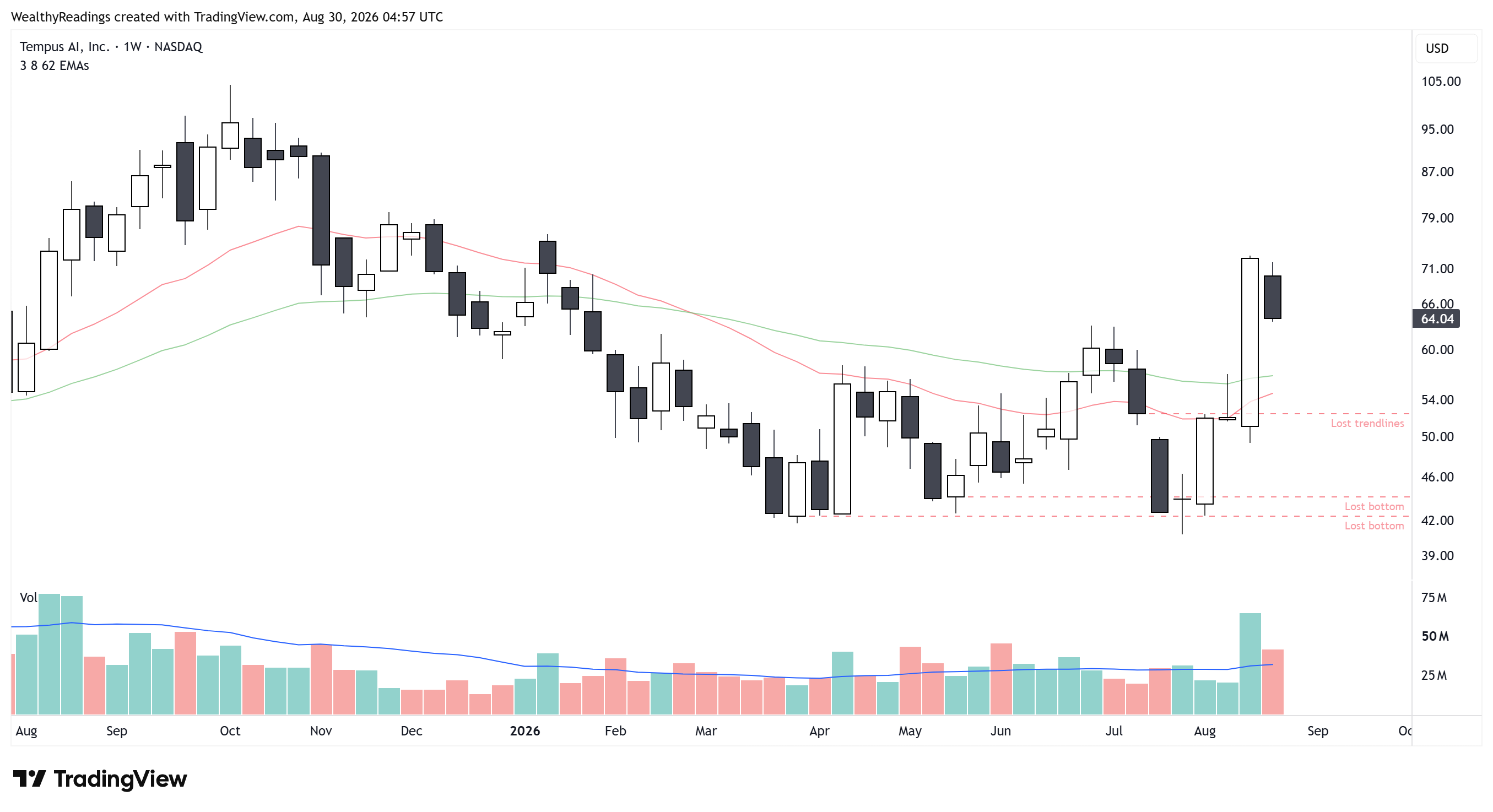
A piece of news from another company triggered optimism. Great, but I could have gone to the casino and put red at this point. Still. Factually, Tempus is up 22% since my original purchase price.
But focusing on that number misses the entire forest behind one small tree.
What Happened To My Liquidity?
Selling a stock means that cash goes to another one. For me, it was Applied Opto at $91, which pushed 60% before I trimmed and held the rest - still do. The overall returns on that liquidity were similar, but I removed the stress of a 30% drawdown from a position that had lost its trend and had no clear catalyst.
Who knows if I would have held? And not sold the bottom, and missed out as well? And there is a second important parameter to take into account.
What If It Didn’t Bounce?
Survivor bias says that we have a tendency to look at the cases that worked out, while ignoring the ones that didn’t. Tempus bounced back. It could also have not. I cut loose many positions this year: Fluence, Enphase, SolarEdge, Cerebras, RocketLab… All of them are much lower today than when I cut them. They might bounce back. They might not. And if they do, what really matters is what will be done with this liquidity until the bounce, not that they bounce.
But there’s another statement I can make, which doesn’t look at one position, but at my total portfolio. I had held all broken trends, I wouldn’t be at all-time highs today.
Tempus was a loser. It now has much better price action and a better profile today, while its sector continues to be strong with many tailwinds. It became a much better candidate for a large position, maybe later.
You don’t make money by being right about everything. You make money by keeping losses small, putting size behind what works, following trends, and giving time to your winners to compound. Right now, my job is simple.
Hold winners. Cut weakness. And don’t confuse inactivity with doing nothing.
Sometimes, doing nothing is the system working exactly as intended
Disclaimer: I am not a licensed financial advisor, analyst, or broker. This content reflects my personal opinions and investment decisions for informational and educational purposes only. I hold positions in securities discussed and may buy or sell without notice. Nothing here constitutes a recommendation to buy, sell, or hold any security. Past performance does not guarantee future results.
Always conduct your own research and consult a qualified professional before making investment decisions. I accept no responsibility for any financial losses.
Tickers: NVDA CRM CRWD RBRK ESTC S NOW PLTR ABNB DUOL MRVL TEM MRNA AAOI FLNC ENPH SEDG CBRS RKLB
💯
Needed to hear this.
Less is more, and sometimes the best thing to do is nothing - Margot Robbie 2026